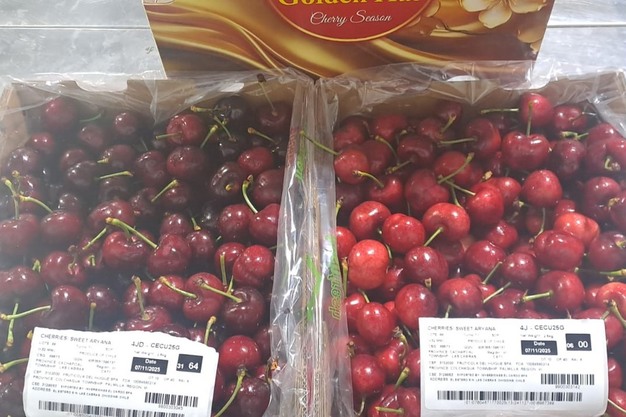
The Chilean cherry campaign is underway with the situation under better control than last year, although marked by a drop of between 15% and 40% in production in some plantations, as reported by Nicolás Yavar, from UPAC Fruit. However, the entry into production of new plantations could partially make up for this drop. According to the Chilean Cherry Committee, 133 million boxes are expected, although many in the sector expect the actual figure to reach between 110 and 120 million, slightly lower than last season's.
China remains the main destination, absorbing around 90% of exports. "The Chinese market started earlier and with greater airfreight volumes than last year, which has kept prices under control. Premium fruit, which represents between 30% and 40% of the total, still generates attractive returns. The Nimba, Royal Dawn, and Sweet Ariana varieties dominate the early harvests, but the Santina, with its large sizes and dark color, is more appreciated by Chinese consumers," says Yavar.
 © UPAC
UPAC, however, is committed to the consolidation of alternative markets. "We are working on programs with supermarkets in the United States and with an importer in Belgium for Europe. We are also seeking opportunities in India, Dubai, and Southeast Asian markets," he says. The medium and small calibers are sent to these destinations, while the jumbo and extra-jumbo continue to go mostly to China due to their better price. "The key is to stick to your plans and not get sidetracked by cyclical prices."
"The weather conditions have been erratic, with frost and rain taking a toll on some sectors, although without a severe impact at the national level. The late start of the Chinese New Year (February 17) will allow a more gradual supply, which could help avoid volume concentration and keep prices stable," he says.
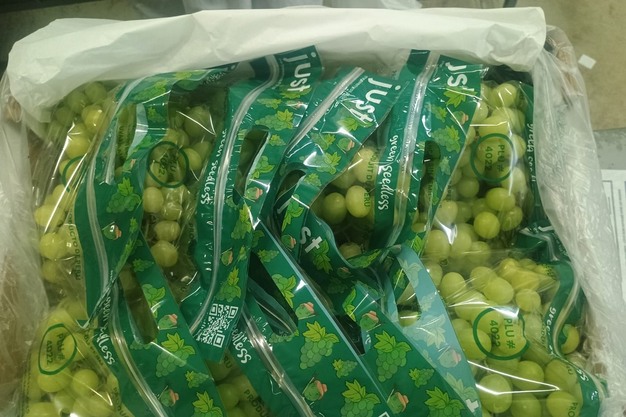 © UPAC
In the case of table grapes, "Chile is starting its campaign this month in the north, and it's doing so in a more challenging context. Peru has already been shipping fruit for weeks, especially to the United States, the main destination for both countries. Last year, there was a market collapse; prices fell from 30 to 8-10 dollars per box. Everything will depend on the combined volumes from Peru and Chile," says Yavar.
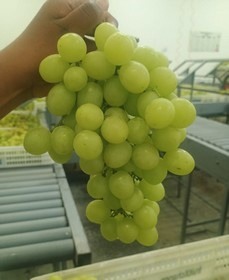 © UPAC "The preference of North American supermarkets for varieties such as the Sweet Globe and Autumn Crisp is putting pressure on traditional varieties, while Europe remains constrained by competition from South Africa. China and Korea are difficult markets for grapes, with a growing national production, especially of Shine Muscat," he says.
In this context, UPAC and many Chilean exporters are pursuing a more diversified planning and a more careful selection of markets and calibers. "We expect a good cherry season and more competitive grapes if volumes are kept under control. When exporters are concerned, they work better," says Yavar.
 For more information:
Nicolás Yavar
UPAC Fruit
Tel.: +56 9 9346 8037
[email protected]
www.justfruits.org