The fig season has been very erratic in terms of both price and quantities harvested. During these last weeks of harvesting, there is a strong operational discontinuity due to the effects of the recent storms, and more generally to market preferences. Supply and demand seem to currently be in balance as the remaining quantity of figs, albeit gradually decreasing, is sufficient to satisfy the still present yet declining demand.
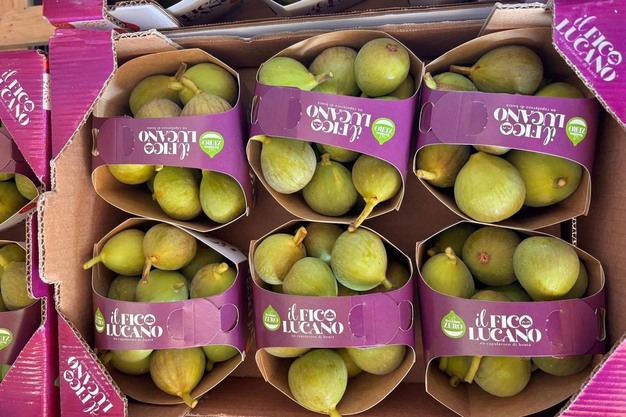 © Azienda Agricola GAIA di Ancona Antonio Vito & C.
Although there has been no persistent rain in the past month, storms have forced producers to wait before harvesting, thereby creating an interruption that has compromised the consistency of supply to customers.
Antonio Vito Ancona, one of the main members of the Ancona PO in Basilicata, which dedicates around 70 hectares to fig cultivation, describes the final stages and the overall production and commercial trend.
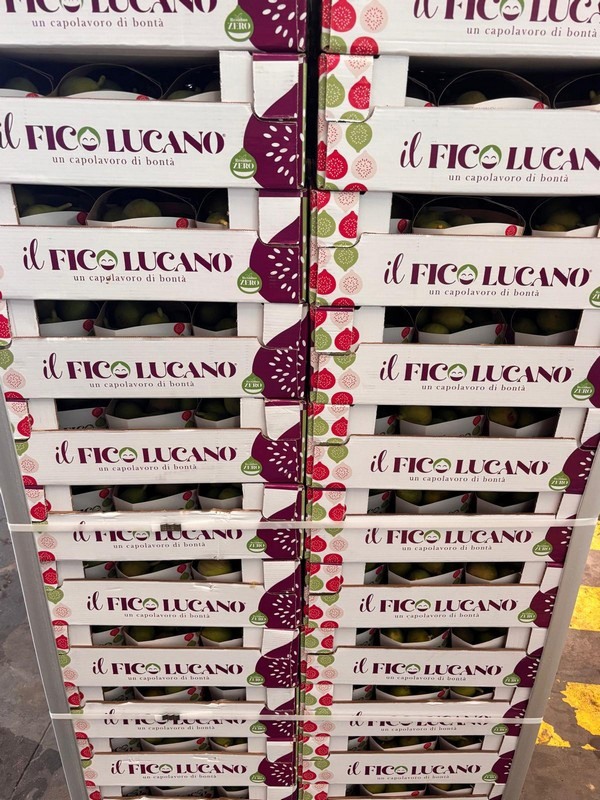 © Azienda Agricola GAIA di Ancona Antonio Vito & C."We are operating with extremely small volumes: we are talking about just 2,000 kg per week. Because of these small quantities and the physiological drop in seasonal interest, we decided to stop supplying supermarkets as early as the first week of October. Sales are now concentrated exclusively on a few wholesale markets in northern Italy."
The drop in volumes is not only a consequence of the weather conditions, but also reflects the natural lack of interest in the market as autumn progresses. The fruit loses its attractiveness after the first ten days of October, with attention turning to other products.
"The lower demand from end consumers also pushes operators to reduce the volumes purchased. Handling the product in this final phase takes longer than in the first month of harvesting (mid-August to mid-October), which is the most intense and important period when it comes to fig demand. In these final stages, sales prices are 20% lower than the highs reached during the season."
Despite the fact that volumes were reduced by 30% during the campaign as a whole, quality was a distinguishing feature. "The absence of frequent rains during the first part of the season, i.e., the peak of harvesting, made it possible to harvest all the available produce. This ensured an optimal product and reduced waste, unlike in previous years. There were no complaints from customers, because the goods were not spoiled compared to other seasons."
For more information: O.P. Ancona
Via Liborio Romeo, 7
75025 Policoro (MT)
+39 0835 972149
[email protected]
opancona.it