With the 43-day U.S. government shutdown ended, the produce industry weighs in on how the shutdown affected them and what things look like ahead.
For Race-West Company, Inc., Harris Cutler says it has been impacted by the fact that long term people it's been doing business with have been unable to pay because they were waiting for government money. "We were getting to a point where it was very, very concerning and this is just in the nick of time," says Cutler. "Some of these companies that we do business with would be pushed out of business. So now we'll be able to collect the money from some of our friends–we trusted them, but we were getting nervous."
He adds that banks were not issuing credit lines and companies were not all prepared to manage this development during the shutdown.
Another area that was impacted by the shutdown was audits and inspections. "Some government/USDA-type audits were suspended because we didn't have the government workers to do that. It made some packing houses and produce suppliers ineligible to ship to the USDA for different food bank programs and things like that," says United Apple Sales' Brett Baker.
 © USDA
Inspector availability
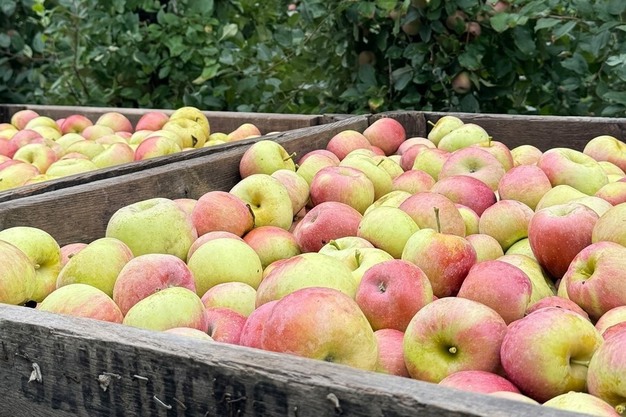
He notes that generally, inspectors are available within two to three days to come to inspect apple loads and this was already on a time-crunched schedule. With the shutdown, a number of inspectors were not working which meant inspectors needed as many as 14 days ahead to be lined up for inspections. "That hurt. We are now in a much better position because we don't have to line them up so far in advance," he says. "We have a big crop nationally and creating any obstacles like not being able to get inspections for international business was not in our favor."
Indeed, Garrett Patricio of Westside Produce also notes issues around inspection services. "Some USDA programs were shut down, so access to some services, including inspection services, was more challenging," he says. "Most of our customers have in-house quality control so many were relying on their in-house QC. To my knowledge, we didn't have any failures that required a USDA inspector to come evaluate."
However on labor, there are mixed reports with some issues. At the US Apple Association, Lynsee Gibbons the shutdown didn't significantly disrupt harvest operations for the apple industry. "Because of the timing, H-2A guest-worker applications had already been approved and crews were in the country and working, so we didn't see the labor interruptions that would have been extremely challenging if the shutdown occurred during a different time of year," says Gibbons.
That wasn't the case for everyone. "The biggest issue for us with the shutdown was getting our orders processed for the H-2A labor we need to bring in. Now this should get back up and running," says Matt Solana, VP of operations/supply chain with the Jackson Farming Company.
 © US Apple Association
Research and the shutdown
Where US Apple did feel the effects of the shutdown though were on the research and grant side of the industry with some federally supported research projects, data collection, and grant disbursements paused. "The industry is eager to see those move forward again. For example, because of the shutdown, total apple holdings and movement in USApple's November AppleTracker could not be reported, as one of the participating states relies on a USDA office to produce its estimate," notes Gibbons.
Other effects were felt in the areas of trade. As Kam Quarles of the National Potato Council notes, the shutdown directly impacted the potato industry and trade. "I was in Tokyo the day that the government shut down and that prevented the U.S. secretary of agriculture Brooke Rollins from being able to travel to Japan to negotiate on one of our most important trade priorities–opening up Japan to fresh potato exports," says Quarles. "That was very disappointing. This shutdown ending allows those officials to get more fully back to work and we're hopeful to get momentum on the trade front."
Quarles also hopes that movement can be restored on the Farm Bill which recently saw an extension. "American agriculture really needs a new farm bill. We're still operating with the farm policy that was written in 2017 and 2018," says Quarles. "We need an update of that farm policy in a variety of different areas– one of the most significant is in crop insurance, in risk management for farmers. This economic crisis that we're in right now reinforces that having adequate risk management tools for fruit and vegetable producers is really important."
On the topic of the economic crisis facing U.S. agriculture, Quarles also notes that the shutdown slowed work on coming up with an adequate economic relief package for the industry. "Now that the government is back open, it allows for those more substantive negotiations to begin. We believe that Congress is going to have to be involved in delivering that entire package. They really needed to be back to work to make all of that run again," he says.
 © USDA
Operations resuming again
With the shutdown behind them, how fast will things be restored for agriculture? "Things will kick in so fast. Credit lines that were being held up will immediately be approved. If someone is holding on their book $1 million of government money, they know they'll get it now in the next two weeks," says Cutler.
Indeed, Baker says he heard from his local USDA agent the morning after the shutdown that they're back to work. "So now we can have the confidence to call a customer and say that we'll be able to get the right inspections done. It's going to take a little while to get things caught up but we're very glad they're back," says Baker.
Cutler is also predicting that the produce industry will now see a flurry of activity given three factors are now in play: Thanksgiving is ahead; food assistance programs will resume movement; and also organizations that have collected donations need to spend that on food. "It has to go out on food or they'll lose the ability to get donations. They'll all be in high gear," he says. "Everybody is also hungry psychologically. They do not want to have a table that has just what they need. They want to have abundance."
He also says that markets could strengthen from here given the business that's ahead. "Our core items are already taking off like crazy" he says, adding that this includes programs which identify and feed people in need on a large scale. "We saw it as an opportunity for the company. Just like we mobilized with COVID, we mobilized so that we would have food for people who were struggling."
As life moves on in the U.S. post shutdown, are there any lessons to be learned? "Everyone should get proper lines of credit and proper accounting procedures and established credit policies in place. It was a very important lesson for everyone," says Cutler, adding that the industry is looking forward to normal operations resuming. "We have a lot of product to move with heavy crops."
For more information:
Harris S. Cutler
Race-West Company, Inc.
https://www.race-west.com/
Brett Baker
United Apple Sales
https://unitedapplesales.com/
Garrett Patricio
Westside Produce
Tel: +1 (559) 659-3025
https://www.westsideproduce.com/
Lynsee Gibbons
US Apple Association
www.usapple.org
Kam Quarles
National Potato Council
https://www.nationalpotatocouncil.org/
Matt Solana
Jackson Farming Company
www.jfcmelons.com