Russia has started building its first greenhouse for banana cultivation, Agriculture Minister Oksana Lut announced at the Bioprom forum. Interest in domestic banana production emerged in 2024 and has now moved to the implementation stage. The initiative follows the government's July 2025 decision to include bananas in the official list of agricultural products, making such projects eligible for state support.
According to the Federal Customs Service, Russia imports up to 1.45 million tons of bananas, worth nearly $1.5 billion annually. For decades, Ecuador supplied about 60–65% of the Russian market, while Costa Rica and Colombia shared another 10–15%. After the introduction of sanctions in 2022, logistics became more complicated, slightly reducing Ecuador's share. The gap has since been filled by other exporters, notably Turkey.
Experimental greenhouses in southern Russia have already produced the first banana harvests. Pilot cultivation is also underway in Sochi and other regions, confirming the technical feasibility of growing bananas under controlled conditions.
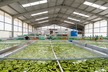
The first domestic complex for growing bananas and other tropical fruits is being developed in the Stavropol region, on 46 hectares within the Nevinnomyssk advanced development zone. Plans include several greenhouse facilities ranging from 100,000 to 150,000 square meters each. Local officials expect the first harvest by spring 2026, with further yields every six months.
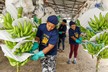
Growing bananas in greenhouses allows cultivation in colder climates but requires strict environmental control. Plants need stable warmth (about 25–30 °C), high humidity, and sufficient light. For commercial production, not wild banana palms, but Cavendish cultivars are used, varieties propagated through in vitro tissue culture. Experts note that while planting material can be purchased from China, the Netherlands, or Israel, establishing domestic micropropagation laboratories would make import substitution fully self-sufficient.
With proper irrigation, feeding, and ventilation, the first fruits can appear within a year, yielding up to 20–30 kg per plant.
Source: profile.ru