Scientists at the International Potato Center (CIP) have developed a new disease-resistant potato variety, CIP-Asiryq, aimed at reducing the impact of late blight, the same disease responsible for the 19th-century Irish Potato Famine. Late blight continues to cause an estimated US$3 to 10 billion in global losses annually and is spreading further into the Andes as temperatures rise.
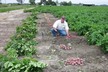
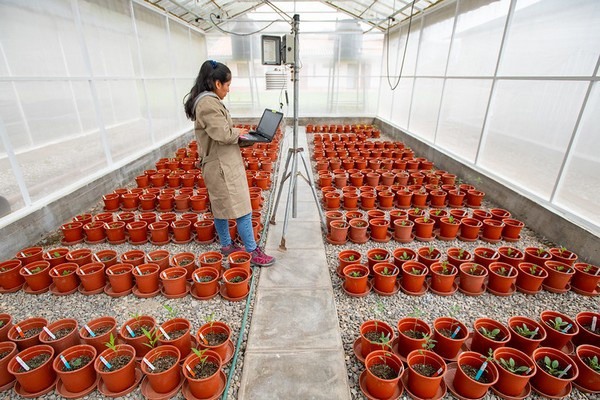
Developed through collaboration between CIP researchers and Indigenous farming communities, CIP-Asiryq resists late blight and requires fewer fungicide sprays. It also cooks faster and shows potential for both table and processing use.
 © Crop Trust
"Late blight costs billions of dollars every year in lost production," said Dr Stefan Schmitz, executive director of the Crop Trust. "The new resistant variety gives potato farmers an option that can reduce losses, cut costs, and strengthen food security in Peru and around the world."
The variety, whose name means "hope" in Quechua, was developed using Solanum cajamarquense, a wild potato relative conserved in the CIP genebank in Lima, home to the world's largest collection of potato diversity. The research was part of the Crop Wild Relatives project and the Biodiversity for Opportunities, Livelihoods and Development (BOLD) initiative, both supported by the Government of Norway.
According to Dr Thiago Mendes, a CIP scientist leading the BOLD potato pre-breeding project, the variety performs well in both fresh and processed markets. "Farmers in Huánuco noted its potential for both fresh consumption and processing, giving producers more flexibility to meet market demand," he said.
 © Crop Trust
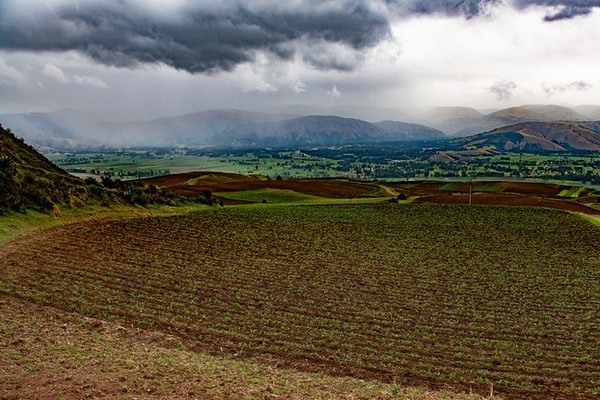
In Peru, late blight can destroy up to 100% of a crop, even at high altitudes, once thought resistant. Farmers typically rely on frequent fungicide applications, which can account for up to 25% of production costs. Reducing fungicide dependence could help lower costs and limit exposure risks for growers.
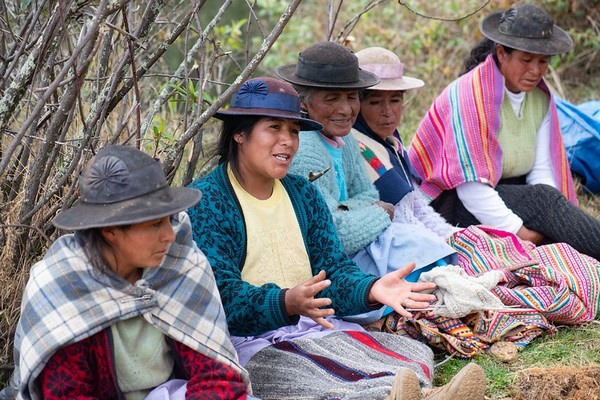
CIP-Asiryq's processing quality also meets industrial standards for potato chips, offering farmers potential access to new markets. Raul Ccanto, coordinator of the Yanapai Group's agrobiodiversity program, said that "small-scale farmers will be happy to earn more by selling to this market and so will the processing companies."
CIP developed the variety in partnership with the Yanapai Group and local producers, combining traditional knowledge with modern breeding. The same genetic material is now being used in Kenya to develop late blight-resistant potatoes for East African highlands through the BOLD project.
 © Crop Trust
"The new potato was developed in Peru by identifying wild potatoes with resistance to the disease and incorporating this resistance into cultivated varieties," Dr Mendes said. "Those parents are conserved in the CIP genebank, which can share them with potato breeding programs in any country under international agreements."
Through such cooperation, the project aims to provide climate-resilient potato options to more smallholder farmers worldwide.
For more information:
Luis Salazar
Crop Trust
Tel: +33 6 99 70 3434
Email: [email protected]
www.croptrust.org