IFCO, a global provider of reusable packaging containers (RPCs) for fresh produce, has published its 2025 ESG Report, marking the completion of its five-year sustainability plan Thriving in the Circular Economy. The company said it achieved progress across all 18 environmental, social, and governance goals during the period.
The report outlines how IFCO's reusable packaging model contributes to reducing packaging and food waste in the global fresh produce supply chain. The company operates in more than 50 countries, working with 18,000 growers and 300 retailers.
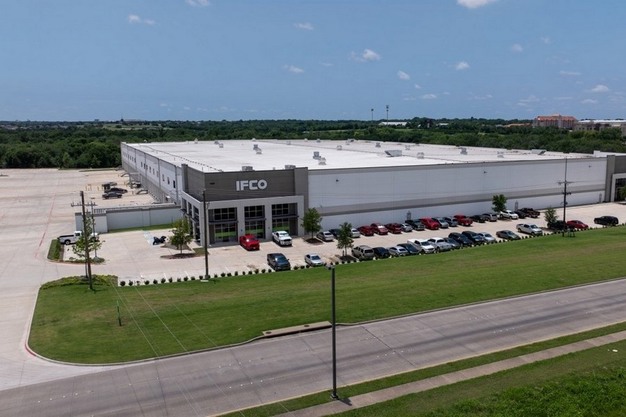 © IFCO
CEO Mike Pooley said, "The success of our ESG strategy shows how sustainability and strong business performance can go hand in hand. By embedding ESG into every decision, we've helped build a more resilient, customer-focused business. Our work is not just about driving strong business results; it is about creating real-world impact, including less waste, greater efficiency, and stronger communities wherever we operate."
Regulatory alignment and global operations
According to the report, IFCO's packaging model supports compliance with Europe's upcoming Packaging and Packaging Waste Regulation (PPWR) and food waste reduction targets under the revised Waste Framework Directive.
In the United States, IFCO's system offers an alternative to single-use packaging within the growing framework of Extended Producer Responsibility (EPR) legislation. The company has also expanded its operations in Latin America and Asia, where circular supply chain adoption is increasing.
Key outcomes from the 2025 strategy
The report cites a 37% reduction in emissions per crate and a 10% reduction in water use per crate since 2021. More than 10 billion single-use boxes have been replaced by reusable packaging, while 3.2 million tons of CO₂ emissions have been avoided.
Other data include a 93% landfill diversion rate, full transition to renewable electricity at all sites, and over 440,000 RPCs donated to food banks globally. Seven new reusable products, including pallets and fish crates, were introduced during the period.
Vice President of ESG and Strategic Marketing Iñigo Canalejo said, "Over the past five years, we have advanced our ESG journey and achieved most of our goals. More importantly, we've built a stronger, more sustainable business together with our people and partners. ESG is now truly embedded in everything we do, helping us thrive as a company while creating value for the planet and society."
SmartCycle™ model and environmental impact
In FY2025, IFCO's SmartCycle™ model reduced CO₂ emissions by up to 62%, water use by up to 69%, and solid waste by up to 96% compared to single-use alternatives. Across all markets, customers collectively saved an estimated 734,766 tons of CO₂ emissions, 55,197 megaliters of water, and 68,706 tons of food waste, equivalent to about 110 million meals avoided from loss.
 © IFCOFor more information:
IFCO SYSTEMS
Tel: +1 800 444 4274
www.ifco.com