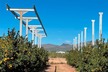
Georgia's citrus season has begun with expectations of improved yields and stable export demand. Kakha Shavadze, founder of Adjara Trading Group, said the 2025 tangerine harvest is projected to reach between 60,000 and 65,000 tons, higher than last year's output. He noted that fruit quality is currently good, with weather conditions expected to support the ripening period.
According to Shavadze, Georgia's citrus export destinations have remained mostly unchanged, though demand from Uzbekistan is showing growth. "The Uzbek market has revived a little. There used to be bureaucratic barriers, but now the Uzbek side has simplified import procedures for our produce. We expect increased exports there this season," he said. He added that greater marketing efforts and diplomatic engagement could help expand Georgia's citrus exports further.
The harvest season has officially started, and a coordination headquarters has been established in Kobuleti to oversee logistics and quality management. More than 20 processing plants are ready to handle export-grade mandarins, while two canneries will process non-standard fruit for industrial use.
To support growers, the Ajara government has reintroduced a subsidy for non-standard mandarins, set at 35 tetri (US$0.13) per kilogram. Processing plants will contribute an additional 5 tetri (US$0.02) per kilogram, bringing the total purchase price to 40 tetri (US$0.15). The subsidy is intended to stabilize the market and ensure that lower-grade fruit is utilized during the season.
Harvest and processing operations are expected to continue through late December, with most exports directed toward traditional markets in Eastern Europe and Central Asia.
Source: Business Media