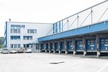
As the Dutch vegetable season draws to a close, activity at Brabant-based carrier Hermus International is also gradually slowing down. The logistics provider looks back on a strong summer. "We had quite a few charters, but we could easily have filled another 20 trucks," says Hermus. The transport company has responded to that capacity shortage, as four new vehicles will be added in January. The total fleet will then number around 50 trucks, including four LHVs.
 © Hermus International
From Oud-Gastel, the company handles both groupage and full-load transport across the Benelux and Germany. With the acquisition of C. van Dijk Transport, East Germany (Berlin) was added two years ago. "We have now completed the full takeover and will handle all activities from Oud-Gastel starting next year," says Jeroen. The acquisition reflects the broader consolidation trend in the transport sector, where bankruptcies, mergers, and takeovers are happening at a rapid pace. Nor does Jeroen expect this trend to end soon. "You can see that you really have to stay sharp to survive. Older and smaller hauliers in particular are no longer keen to deal with all the new laws and regulations, while others are seeking economies of scale to maintain sufficient margins."
 © Hermus International
"You also notice that customers increasingly prefer centralised delivery. Where we once had to collect a few pallets from ten or fifteen different locations, large retail chains are now looking for ways to streamline their supply chains and cut costs," Jeroen explains. "About 70-80% of the goods we transport now are fresh produce. We fill the rest with confectionery and other goods." Hermus aims to distinguish itself through specialisation. "You shouldn't try to operate everywhere in groupage. We often agree on rates directly with customers. The right customers are willing to pay for service and quality, although, of course, you have to remain competitive. The only area that's more difficult is the return freight market. Prices there haven't increased in three years, even as costs have gone up."
 © Hermus International
Another challenge Jeroen highlights is the electrification of the fleet. "Eventually, the market will head in that direction. If you mostly operate locally, it might make sense, but for international transport, we don't yet see the possibilities. However, if road tolls in the Netherlands become more favourable for electric vehicles, it could soon become more attractive. Charging capacity is improving, although the international infrastructure is still not ready. And with our operations, range is crucial. Arriving a day late with blueberries in Munich is not an option. What we hear from many customers is that they really appreciate our flexibility. We always try to find a solution, even if a customer calls at 6 p.m., we do our best to help them. That's how we try to stay unique."
 © Hermus International
 For more information:
Jeroen van Leijsen
Hermus International
Emmerblok 17
4751 XE Oud Gastel
Tel: +31 (0) 6 30591447
[email protected]
www.hermus-international.com