The 2025 citrus fruit campaign in Piana di Sibari started with a scenario that combines optimism and difficulties. Calabrian clementines, a symbol of the area and its agricultural identity, are once again showing their strong point: a high-quality profile, with intensely-flavoured, juicy fruit, an excellent sugar level, and uniform colouring. However, the size remains on average similar to last year's, and the market started cautiously with stable quotations that leave no room for easy enthusiasm.
According to Antonio and Alfonso Malagrinò, Agrifaam's sales manager and quality and logistics manager, respectively, the game is being played on two fronts. "On the one hand, there is the production factor, which is linked to an increasingly extreme climate that is difficult to predict. In fact, the summer of 2025 - particularly June and July - was one of the hottest and driest in recent years, with high temperatures and low rainfall, although emergency irrigation made it possible to maintain high quality and preserve the sweetness of the fruit. On the other hand, there is the structural problem of the supply chain, which concerns above all the ability to work as a team, to aggregate and to be present on the market in a compact and organised manner."
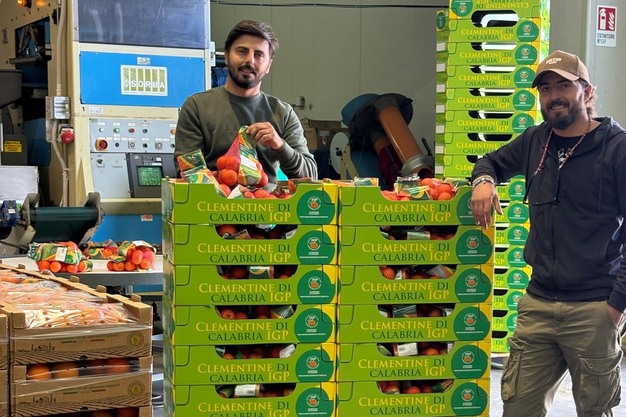 © AGRIFAAMAlfonso and Antonio Malagrinò
The differences between varieties, already evident at this stage, are evidence of a sector that knows how to react to climatic challenges thanks to diversification. "Early varieties such as Clemenrubi, Spinoso, Caffin, and Orogros offered tasty fruit ready for the first markets; medium varieties, such as Comune, stood for their balance; late varieties, however, could gain in size and commercial durability with the autumn rain. Varietal diversification is now a compulsory step because it allows us to spread the risks and respond better to an increasingly unstable climate."
On the consumption front, an encouraging fact emerges. "After years of decline, fresh fruit is once again being chosen with greater conviction by Italian families, driven by a growing attention to health and seasonality. Sales of packaged products are growing thanks to their practicality and the perception of safety they offer, though the loose product continues to maintain its place in local markets. Modern consumers, however, are no longer satisfied with the goodness of a product. Today, they look for fruit that is beautiful to look at, easy to consume, guaranteed in its origin, and sustainable in its packaging. Seedless varieties, edible peel, organic lines, and ecological packaging are no longer an added value chosen by just a few, but are becoming increasingly popular. In this context, the PGI Clementine di Calabria brand remains a fundamental card, capable of narrating the link with the territory and transmitting trust."
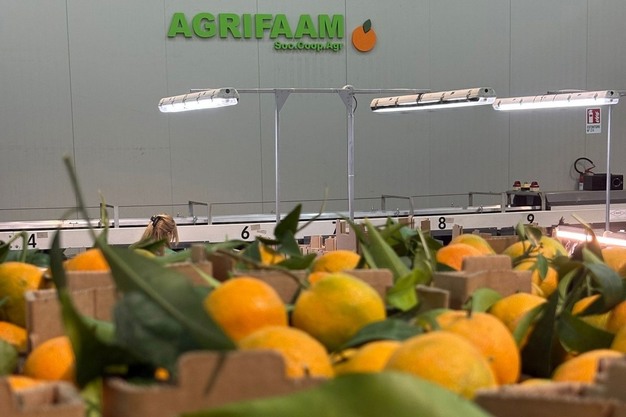
What role do big distributors and wholesale markets play? "Big retail chains are now the dominant channel; they dictate the standards and delivery times, but they can also enhance high-quality products if there is coordinated communication. Wholesale markets remain important for flexibility and to give space to independent producers. Future growth depends on the collaboration between producer organisations and commercial channels, to ensure continuity of supply and promotion of the Calabrian brand."
 © AGRIFAAM
The difficulties remain related to producer prices. "Production costs are constantly rising, including water, energy, and labour, while prices continue to be squeezed by fierce competition. Spain dominates with its production and logistical capacity, while Morocco keeps entry prices in European markets low. Our strong point is the flavour," stresses Antonio Malagrinò. "Calabrian clementines have a sweetness and aromatic profile that is unmatched. But that's not enough: Spain doesn't just sell a fruit, it sells a brand. And if we don't learn to do the same, we risk being left behind."
Alongside these aspects, there is a deeper reflection on the future of the supply chain, which the Malagrinos do not hesitate to bring to the table. "We have to start collaborating and cooperating, otherwise we are out. Being fragmented does not lead to anything; indeed, it risks making us appear unprepared in the eyes of the market."
But the issue also concerns generational change. "If you don't give young people space, you won't get anywhere. The older generations will sooner or later give up, but in the meantime, they continue to impose themselves. We are often seen as inexperienced, but you don't grow without trust and openness. Improvisation is destroying our work and our territory. We need organisation, planning, and seriousness.
On a commercial level, Germany remains the main outlet for exports, but there is growing interest from France, where the natural sweetness and thin peel of Calabrian clementines are much appreciated. Eastern European buyers, met during the recent Clementina Festival, also showed great interest, provided, however, that they find a supply chain capable of offering continuity, reliability, and a strong brand. "Identity, organisation and unity: this is the key. This is the only way to compete with the big Mediterranean players and give our product the recognition it deserves."
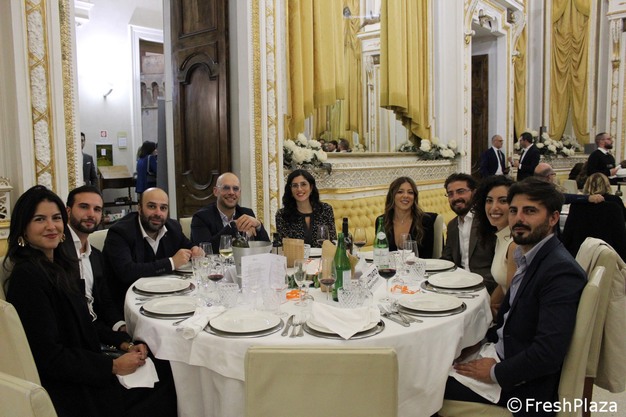 © Maria Luigia Brusco | FreshPlaza.com
The Malagrinò brothers at the gala dinner held during the Clementina Festival
What medium-term trends do you see? "The direction is clear: climate adaptation and innovation. We need heat-resistant varieties, efficient irrigation systems, and more sustainable agronomic techniques. But, above all, we need chain governance that combines production, research, and communication. On the consumption front, there is a growing demand for traceability, ecological packaging, and zero residue. Calabrian citrus cultivation must present itself as a model of Mediterranean quality."
Calabrian clementines are not just a fruit, but a symbol of culture and agricultural identity. Transforming them into a competitive brand means focusing on cooperation, innovation, and coordinated communication. The challenge today is to overcome fragmentation and improvisation, giving space to a new generation of producers and presenting themselves united on the markets. It is not an easy road, but a necessary one. Because, as Antonio and Alfonso Malagrinò conclude, "only by working together can we not be cut off."
For more information:
Antonio Malagrinò - sales manager
[email protected]
Alfonso Malagrinò - quality and logistics manager
[email protected]
Maria Malagrinò - administration
[email protected] AGRIFAAM Soc. Coop. Agr.
C.da Sant'Irene
87064 Corigliano-Rossano (CS) - Italy
+39 0983 524433
agrifaamcoop.it