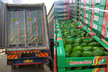
New data from Fresh Facts 2025, released by United Fresh, shows that Aotearoa New Zealand's fruit exports increased by $1.69 billion compared with last year, largely driven by higher kiwifruit export volumes.
According to the report, combined fresh and processed produce exports reached $6.85 billion free on board (FOB) in the year to 30 June 2025. Australia and Japan remain New Zealand's largest export markets, followed by China and the European Union.
"Fresh fruit exports alone generated $5.68 billion FOB, a $1.69 billion (42%) increase over 2024," said Jacob Lawes, Project Manager of the United Fresh Technical Advisory Group. "Kiwifruit continues to be our largest export crop, contributing $3.66 billion FOB towards our fresh produce exports, up 35% compared to 2024."
The government's target to double New Zealand's produce exports from 2024's $5.08 billion to $10.16 billion by 2034 appears achievable if current growth trends continue. Based on current trajectories, fresh produce exports could reach between $14.8 billion and $18.5 billion FOB by 2034.
The report also indicates progress toward the Aotearoa Horticulture Action Plan (AHAP)'s farmgate value goal of $7.36 billion. "Fresh Facts 2025 provides accurate and reliable data, allowing us to track progress against this goal," said Lawes.
The publication highlights the growing contribution of Māori to the sector, noting that 5,715 hectares of Māori-owned land are now used for fruit and vegetable production — a 470% increase over the past 20 years. Māori horticultural assets are currently valued at $3.7 billion.
For the first time, the report includes data on logistics within the produce sector. Thirteen air and sea ports handle produce exports, while the domestic rail network transports nearly 11,000 tons of bananas, 15,000 tons of potatoes, and 19,000 tons of onions annually between regions for both domestic and export customers.
While export and production growth have been strong, Fresh Facts 2025 also identifies challenges. It found that 94% of annual reports analysed mention sustainability, but only 17% of organisations have adopted the United Nations Sustainable Development Goals (UN SDGs), and just 13% use data to monitor sustainability progress. "While sustainability reporting has improved since 2024, there is still a gap between sustainability awareness and action," Lawes said.
This year's edition also reviews key developments shaping the sector, including artificial intelligence, food safety, industry standards, workforce training, and the role of scholarships in attracting new entrants to horticulture.
United Fresh, which publishes Fresh Facts annually, represents New Zealand's pan-produce sector. The report excludes wine and wine grapes, which are covered by New Zealand Winegrowers.
 © United FreshFor more information:
United Fresh
Tel: +64 9 480 5057
Email: [email protected]
www.unitedfresh.co.nz