In Germany, 30% of watermelon consumers only buy them seedless, while in Italy, this percentage is 8%. Those who buy both types are 55% in Germany and 42% in Italy. The trend, therefore, seems clear, although there is always room for the traditional product. These are some of the data that emerged yesterday, 28 October 2025, at the Watermelon Summit 2025 held in Rome, which was organised by BASF-Nunhems (and moderated by Laura Mazzini, BASF-Nunhems marketing dept.) and attended by about a hundred Italian watermelon producers and traders.
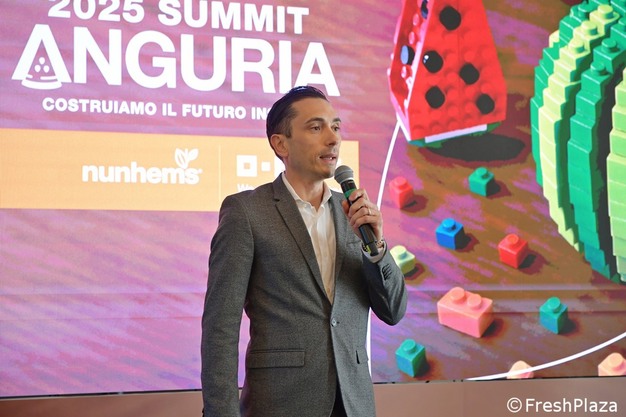 © Cristiano Riciputi | FreshPlaza.comWilliam Cavalieri
William Cavalieri, the BASF Nunhems country manager, began by saying that "today we are here with you, who represent the watermelon supply chain in Italy. The purpose of this day is to tell, imagine, and build the future of watermelons."
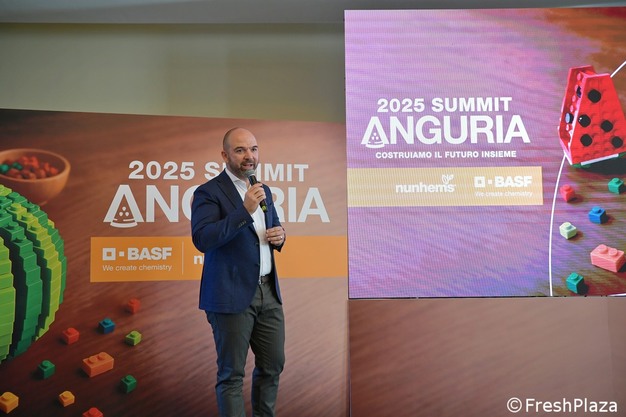 © Cristiano Riciputi | FreshPlaza.comMirko Barbieri
According to Mirko Barbieri (Regional Head EMEA East at BASF Nunhems), "innovation is at the heart of our work. When we talk about watermelons, everything starts with genetic research aimed at the market and, in the end, consumers. Taking a look at our recent history, in 1999, we introduced the first seedless sugarbabies. We then continued our research on traditional varieties, especially in the early segment. In 2005, we introduced mini commercial varieties with micro seeds. In 2017, we introduced the black seedless mini. In 2025, we introduced a seedless mini that is green on the outside. Today, we have a wide assortment, but we are still investing in research. The main segments we are working on are micro-seeded minis: The first ones will be in the field as early as next season, boasting a very high organoleptic level. Another mainstay will be the supermini watermelons, weighing one kg or less, and made to measure."
 © Cristiano Riciputi | FreshPlaza.com
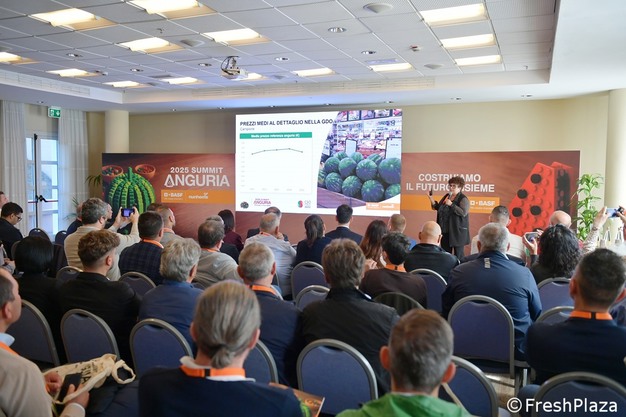
Elisa Macchi, Director of CSO Italy, provided a national overview. "The areas invested in watermelons were 17,836 hectares in 2025. They were just under 16,000 in 2022, then there was an upward trend. 20% is cultivated in the north of Italy, the rest is in the centre and south. In Europe, the leading producer country is Spain with almost 22 thousand hectares. In 2025, production in Italy was 1,160,451 tonnes. Such a high production and the overlapping of transplants, together with the impact of the climate, caused some commercial problems. The average price was slightly lower than in 2024, but the traditional product suffered more, while midi watermelons held up better."
 © Cristiano Riciputi | FreshPlaza.com
"As for the destination markets, Germany imports around 450,000 tonnes of watermelons (2024 figures). Spain is the main country supplying this market, with around 240 thousand tonnes (slightly decreasing trend), while Italy is growing and has maintained its market share. France imports a total of 255 thousand tonnes, and the main suppliers are Spain and Morocco; Italy exports 20 thousand tonnes. Great Britain registered an exponential growth, with Italy exporting 7000 tonnes there, up from the 2000 tonnes of a few years ago. In total, Italy exported 300 thousand tonnes in 2024 with an average starting price of €0.56/kg."
"As for domestic consumption, it has increased over the past five years in Spain, Italy, and Great Britain. The interesting fact is that little is consumed in some countries, so there is room for growth. In general, we should not race on prices, but differentiate ourselves based on innovation and recognisability," concluded Elisa Macchi.
 © Cristiano Riciputi | FreshPlaza.comSergio Grasso
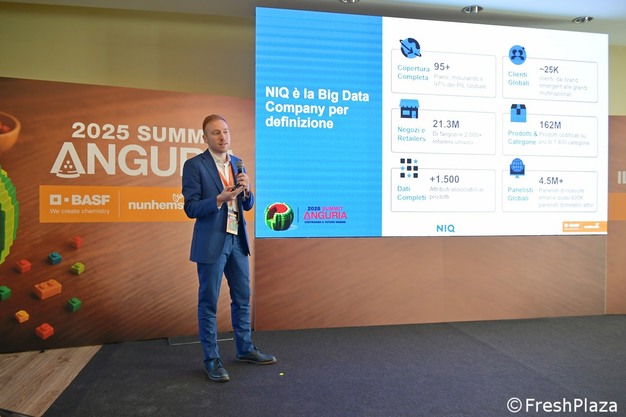
Sergio Grasso (Nielsen) spoke about consumption in Italy and Germany. The research was carried out a month ago on 1000 households in Italy and 2500 in Germany. People buy watermelons because they are refreshing and, in Germany, they are seen as a versatile product that everyone likes.
"There are 35 million consumers in Italy and 52 million in Germany. With respect to age groups, the biggest consumers are children between 4 and 13, and then there is the 35 to 44 age group. The main drivers are quality, price, and colour. When it comes to seedless products, in Italy, this is a driver at 22%, and in Germany, at 45%. Considering weight, there is no prevailing size, but the whole mini range (3 kg) seems to be the preferred one (30% Italy, 47% Germany), while in Germany the whole medium range (4-6 kg) is also successful."
 © Cristiano Riciputi | FreshPlaza.com
"Every third Italian buys watermelons once a week and, in Italy, mostly in big retail chains (57%, 26% discount stores, 17% other channels). In Germany, 30% buy only seedless watermelons, while in Italy 8% buy only seedless ones. In Italy, 42% buy both, and in Germany, 55% take home both seeded and seedless ones.
What do consumers want? In Italy, they want recommendations on how to choose, e.g., information on origin and traceability. In Germany, first of all, they ask for smaller fruits without imperfections, and clearer information on origin and traceability."
Stop and think
You don't always have to run, but you also have to stop and think. This was one of the concepts expressed by Daniela Sensini of the consulting company 'Facciamo 31', who spoke about how to better intercept and satisfy consumers. "Let's abolish the concept of 'this is how it's always been done'. The words that kill change are 'if', 'but', and 'however'. Beware of those companies that 'don't have problems': maybe they don't have them because they ignore them, and because some don't want to deal with them. Companies close down because ignorance is based on a lack of awareness; they must ask 'Is what I am doing functional to achieve my goals?'. We need the switch from 'doing' to 'thinking'. Too often, people do, but they think little. Some entrepreneurs are afraid to stop and think; they consider it a waste of time. Instead, it is necessary to think."
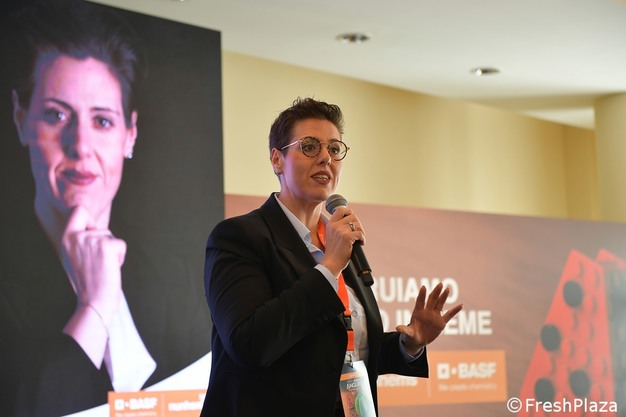 © Cristiano Riciputi | FreshPlaza.comDaniela Sensini
"Very often, we reject change because we are not familiar with it and prefer to remain in our comfort zone. Don't take trivial things for granted, e.g., 'customers'. We strengthen our interests and needs if we have a way of thinking that is 'customer-centred'. Customers often buy using their heart and validate with their brain. People often buy things they want, which are not necessarily useful. The Swedish company Ikea not only sells cheap furniture, but also the ability to build, meaning customers are satisfied twice - they have the furniture and they are proud of themselves for having made it. Tassoni lemonade, which had fallen into oblivion for several years, was relaunched with a rebranding campaign."
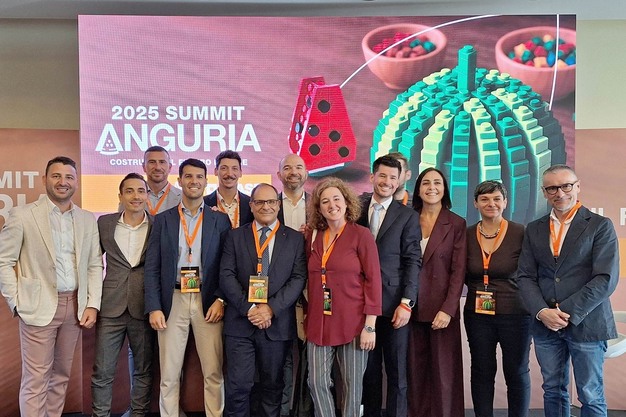 © BASF Italia SpAGroup photo for BASF Nunhems
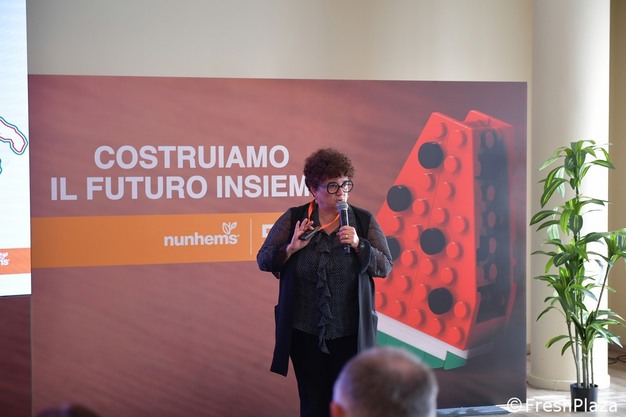
"There is no growth without change, but there is change without growth. Be careful not to entrust your communication to rookies. Communication needs professionals with specialised skills. And you are here in the room, why don't you collaborate instead of competing? Do you play against each other, or do you seek common strategies? 'It's time to say no to war between the poor,' an entrepreneur told me a short while ago. It is not possible to save ourselves on our own. I tell entrepreneurs to study one hour every week, delving into different topics from time to time, because it is important to have broader and broader skills."
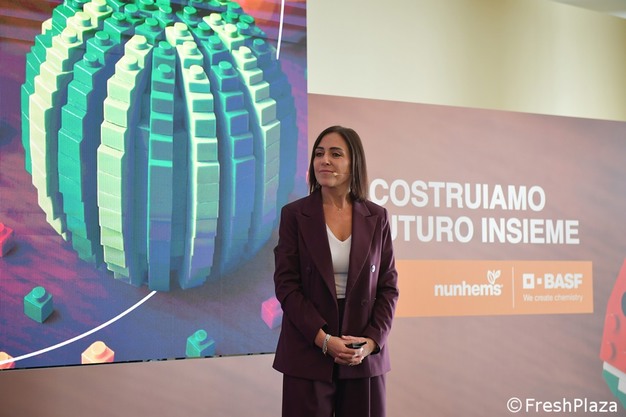 © Cristiano Riciputi | FreshPlaza.comLaura Mazzini
"Remember to subordinate instincts to values. My mission is to shift the meaning of effort to another league, not just that of doing and centralising, but that of thinking, preventing, and growing. Let effort be the means, but not the goal," concluded Daniela Sensini.
Laura Mazzini collected bricks from each speaker, represented by keywords. As emerged from the summit, the bricks that will make up the future vision of watermelons are: innovation (Mirko Barbieri), information (Elisa Macchi), consumers (Sergio Grasso), discipline (Daniela Sensini), and collaboration (William Cavalieri).