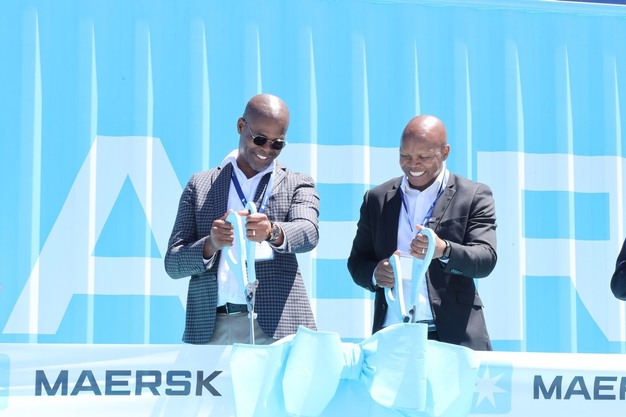
Maersk has officially opened the Belcon Cold Store in Cape Town as part of a broader investment exceeding US$100 million in South Africa's cold chain logistics infrastructure. The new facility forms part of the company's strategy to enhance the country's capacity to handle perishable exports such as citrus and table grapes.
According to Maersk Southern Africa & Islands managing director Lubabalo Mtya, the expansion reflects a long-term focus on improving logistics performance. "We are committed to building and delivering logistics solutions that create tangible value for our customers and their businesses, while contributing to South Africa's economic prosperity and the livelihoods of its people," he said.
 © Maersk
Cold chain challenges and industry impact
South Africa's fruit industry, particularly table grapes and citrus, has faced recurring challenges in maintaining an unbroken cold chain during export. Delays and logistics disruptions have led to annual losses estimated at 1.5 billion rand (about US$82 million). Inconsistent performance in the country's cold-chain logistics network has made it more difficult for exporters to maintain quality and competitiveness in international markets.
"The Belcon Cold Store directly addresses this critical gap in the market," Mtya said.
New facility and network expansion
With the launch of Belcon, Maersk now operates three cold storage facilities in South Africa — Belcon in Cape Town, Cato in Durban, and PreCool in Johannesburg. The sites are positioned to support perishable exporters through integrated multimodal connections linking ports, rail, and road networks.
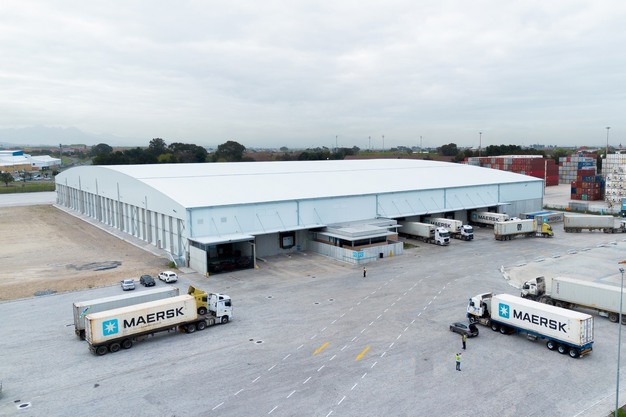
The Belcon facility includes 32,000 pallet positions, direct access to the port of Cape Town, and an on-site container depot. It also incorporates renewable energy systems designed to lower emissions in temperature-controlled supply chains.
 © Maersk
The facilities began operations during the second half of 2025 and were used throughout the recent citrus season. Early results have shown improved product flow and reduced waste through better temperature management and shorter transit times.
Integrated logistics model
Maersk's approach in South Africa extends beyond ocean shipping to cover full supply-chain solutions, including consolidation, cold storage, customs services, terminal handling, and inland transportation. "We are listening to our customers and implementing solutions that go beyond business as usual," said Mtya. "This integrated approach means we're not only delivering on ocean shipping but providing our customers with complete logistics solutions that address their most pressing challenges."
Supporting export growth
The new investment reflects confidence in South Africa's export potential and the need for reliable cold storage infrastructure. By improving temperature-controlled logistics capacity, exporters are expected to benefit from greater efficiency and reduced losses, supporting access to international markets.
 © MaerskFor more information:
Adhish Alawani
Maersk
Email: [email protected]
www.maersk.com