Since Vaalwater-based stone fruit grower ALFRA – short for Alida and Frans Blignaut – sent their first peaches and nectarines to the municipal markets in City Deep, Jhb, and Pretoria during the first week of October, prices have already dropped markedly. "The stone fruit market flattened off very rapidly. We're not as much ahead of the Cape as before. They've been growing earlier cultivars," says Alida Blignaut. "These days, we're not on the market for very long before our market agents tell us that the first Cape stone fruit has arrived."
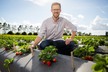
The Limpopo farm is tiny – around fifteen hectares of stone fruit orchards – compared to its Western Cape counterparts.
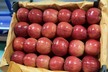
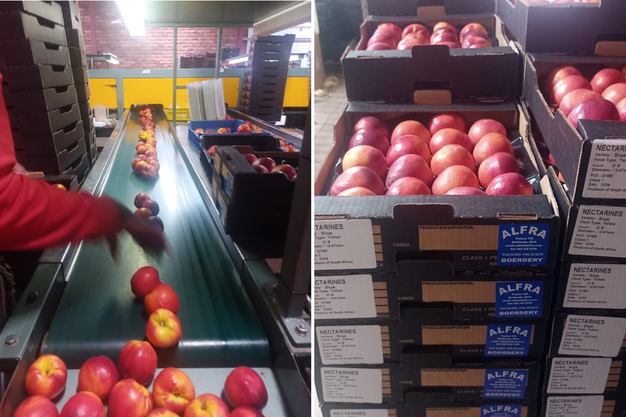 © ALFRA Skye nectarines running over the packline for the municipal markets of Johannesburg and Tshwane (Pretoria)
Export quality stone fruit for local market
The farming enterprise is diversified in the old-fashioned way of homesteads with cattle, growing seed corn, and white beans used in tins of baked beans. They used to grow baby marrows (zucchini) until the market slowed down with Covid, and they decided to stop growing baby vegetables.
"Because we don't export, it's our export quality that goes to the market. You can't send class three fruit to the market – it's unfair towards consumers," she says. It is a conviction she holds dear: she's not only thinking of the middle class who can afford to buy a 20B tray of perfect Royal Ruby nectarines for R100 (€4.9) at their local greengrocer (and devour it in a single day), but also of those for whom a single nectarine has to be weighed up against buying staples.
A large proportion of the fruit they send to the market will be bought by street traders who'll be selling it per unit, preferring nectarines over peaches.
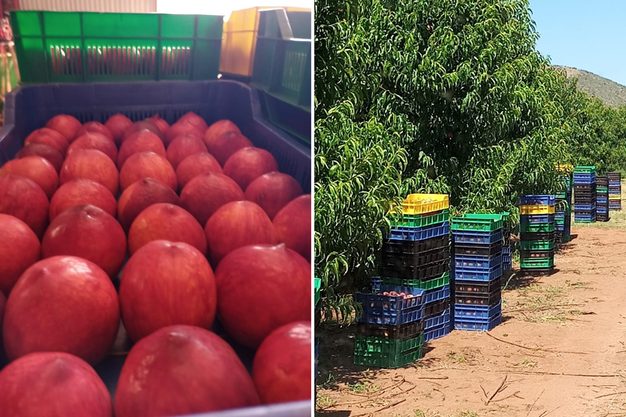 © ALFRA
"We are trying to move in a biological direction"
They might not have GlobalG.A.P accreditation - farming on a small scale makes it prohibitively expensive, she says, and besides, they do not have sufficient volumes to fill export containers – but its principles guide how they farm. "We are trying to a large degree to move in a biological direction. We uphold sound principles, like strictly keeping to withholding periods and staying under the residue limits."
Their market agent just recently again commented on the neatness of their packaging and the appearance of their offering. Guaranteeing a satisfying purchase to the consumer who chooses to buy a nectarine or a peach is a matter to which they give much thought. They are deliberate in building a name with their nectarines and peaches.
Unfortunately, strong winds earlier this week, accompanied by some rain, blew off a significant amount of their fruit, and in July last year, a black frost reduced their crop dramatically. They take no chances with their fresh sales, and since these cultivars are not suitable for drying, their cattle are having a field day on the fallen fruit.
"At this stage, the crop still seems a bit larger than last year. We do hope so. We are grateful and feel ourselves blessed with every marketable fruit we pack," she says, remarking that every morning at ALFRA starts with a communal prayer.
For more information:
Alida Blignaut
ALFRA
Tel: +27 82 532 8759
Email: [email protected]