Researchers at James Hutton Scientific Services have secured five years of funding to continue developing blackcurrants suitable for the fresh fruit market, in collaboration with Winterwood Farms Ltd.
Although blackcurrants are known for their high vitamin C content and antioxidant properties, they are mainly grown for processing and rarely sold as fresh fruit in UK supermarkets. The new research aims to breed blackcurrant varieties that are more appealing for fresh consumption by improving taste, shelf life, and harvesting efficiency.
 © James Hutton
The project will focus on key characteristics such as fruit size, sugar levels, and longer, visually appealing fruit clusters suited for retail presentation. In addition to enhancing flavour and quality, the breeding work aims to improve crop resilience by reducing the need for chemical inputs and adapting the fruit to changing climatic conditions through traits such as lower winter chilling requirements and improved pest and disease resistance.
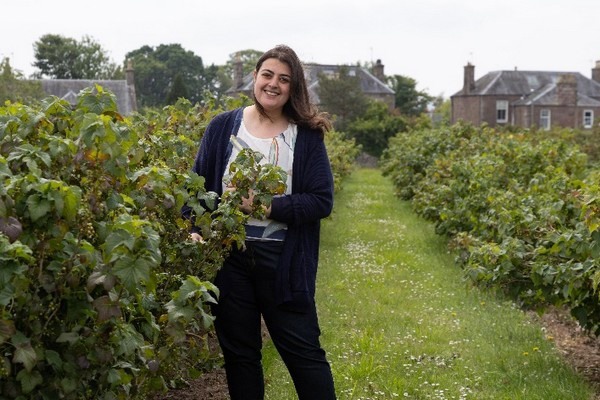
Dr Amanda Moura, specialist blackcurrant breeder at the Hutton, said, "We want shoppers to find blackcurrants on supermarket shelves as a fresh and healthy choice, while ensuring the crop remains resilient for future farming. This is ambitious work, as we are almost completely redefining the genetics of blackcurrants. It demands dedication, time, and perhaps a touch of luck. This project began nearly 20 years ago, and we all feel we are finally getting closer now."
Steve Taylor, Managing Director of Winterwood Farms Ltd, noted that most existing varieties are too tart for fresh consumption. "Although many blackcurrant varieties exist around the world, none of them are sweet enough to be consumed in the same way as, say, raspberries and blueberries. Purely from a health perspective, blackcurrants have the potential to be a superfood, particularly if they were sweet enough to snack on, rather than restricted to cooking with, or mixing with other fruits."
Trials of new selections will take place on Winterwood Farms sites to ensure the varieties meet both commercial and consumer needs.
The Huttons' soft fruit breeding programme supports the wider Scottish fruit sector, from growers to retailers, by developing cultivars with improved performance and reduced environmental impact. Using marker-assisted breeding and genetic selection, researchers aim to produce new varieties more efficiently while addressing issues such as pest control, reduced pesticide use, and climate resilience.
 © James HuttonFor more information:
Joyce Reid
James Hutton Scientific Services
Tel: +44 (0) 7931 551 988
Email: [email protected]
www.hutton.ac.uk