The Spanish mango campaign is in its final stages with the arrival of the latest varieties, and production in 2025 is estimated to reach 40,000 tons, with the Axarquia region accounting for the largest share, with almost 95% of the country's acreage. Meanwhile, the first green skin avocados have already started to be harvested, although the Hass harvest won't kick off until mid-November. The Spanish avocado production could exceed 100,000 tons in the 2025-2026 season.
"After some disappointing previous seasons, European clients are increasingly relying on the high quality of Spanish mangoes," says José María López, president of the Spanish Tropical Association. "Thanks to the new system for reclaimed water use, we hope to continue to grow in terms of volume and to supply the European market. The sector is also calling on Europe to stand behind European and Spanish production, which is key to the consolidation of Spanish fruit in international markets," he says.
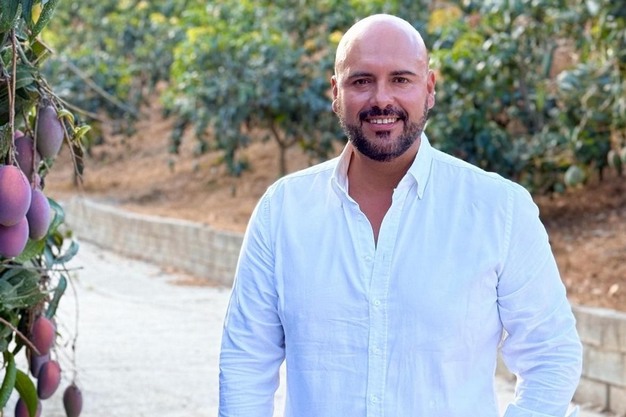 © Aasociación Española de Tropicales
Malaga's mango season is now in its final stretch, with a much more abundant production compared to previous years. "We've seen a significant development, going from seasons with very low quantities to having much larger volumes this year. This is allowing us to be more present in the markets and to better meet the demand. It is also giving us more leeway to negotiate prices and open up new sales opportunities, both nationally and internationally. However, it is also a challenge, as we have to manage the logistics and ensure that the fruit arrives in the best possible condition," says José María López.
"It's worth noting that European chains are once again backing Spanish mango. Brazil remains a strong competitor, but this year Spain has managed to position itself very well in the European market by supplying larger volumes and top-quality fruit," he says.
Nonetheless, the greater supply has also brought challenges in marketing. "This year, mango production and quality in Spain and in La Axarquía are very good, but growers are dealing with significantly higher costs: electricity, fertilizers, transport, and a higher minimum wage," says the association's president. "However, the prices received by growers have not gone up at the same rate, and in my opinion, they have even slightly dropped in some cases. Therefore, although the market and chains hold Spanish mango in very high regard, that doesn't always go hand in hand with profitability for those of us growing it."
Spain's avocado production could exceed 100,000 tons
The Spanish Hass avocado season will start in mid-November, mainly in Cadiz, Huelva, and the Valencia region. "The upcoming Hass avocado production in Spain is looking very good," says José María López. "After this year's rains, a larger crop of excellent quality fruit is expected, and production could exceed 100,000 tons."
"It's worth noting that production in Malaga and the coast of Granada has partially recovered after last year's rains, and the acreage is also growing in other places, like Cadiz and the Valencia region. Also, the green skin avocado season has already started, featuring varieties such as the Bacon, with very positive prospects thanks to an increase in production and high-quality fruit."
"After the recent rains, Spanish production, especially in Malaga, the coast of Granada, Cadiz, and the Valencian Community, is expected to remain at a good level and to continue to consolidate in the market."