"Now is the time to roll up our sleeves," say landowner and entrepreneur Henk Kasi and cultivation technician and passionate horticulture pioneer Rakesh Jhagroe. Together, under the name Agro Nature Su NV, they are launching an ambitious project: a modern 4,000 m² greenhouse in Lelydorp, where soon up to 60,000 heads of lettuce will be harvested every month. The timing is no coincidence: Suriname expects an influx of thousands of workers in the oil and gas industry starting in 2028. They, too, will need to eat—preferably healthy, fresh, and local food.
 © Pieter Boekhout | FreshPlaza.com
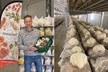
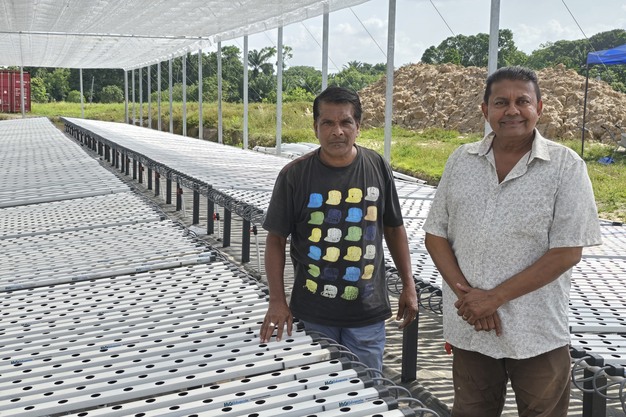
On the right, Henk Kasi, landowner and entrepreneur, and on the left, Rakesh Jhagroe, cultivation technician and passionate horticulture pioneer
For Rakesh, the story of this project actually began with a setback. He previously worked on a large-scale cultivation initiative for ginger, bananas, and passion fruit, supported by USAID funds from the Biden administration. "There was already about half a million SRD—just over €10,000, invested in irrigation systems and fertilizers," he says. But when the U.S. government changed under President Trump, the funds suddenly stopped. "The project came to a halt, and the fields have been lying fallow ever since."
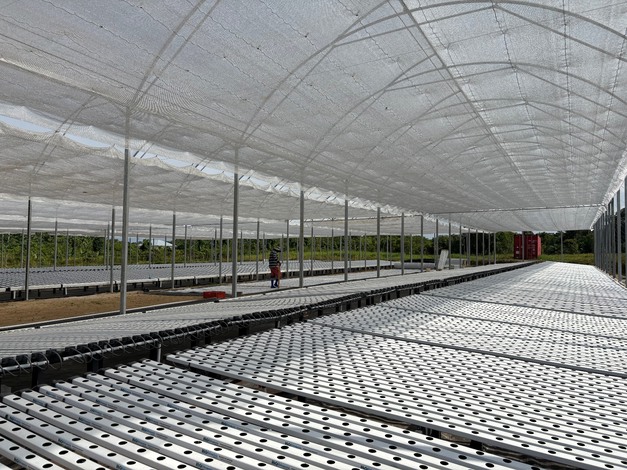
But when one door closes, another opens. Now Rakesh is joining forces with Henk Kasi for something new and promising: large-scale lettuce cultivation in a greenhouse in Lelydorp. The greenhouse is currently 75% complete, and the plans have been worked out in detail.
 © Pieter Boekhout | FreshPlaza.com
The ambition is firm: up to 60,000 heads per month. They have chosen Israeli greenhouse technology and shade netting.
Lettuce and Bok Choy
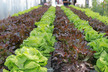
The greenhouse will produce a mix of lettuce varieties: Caipiri (a Batavia-type), oakleaf, and possibly iceberg lettuce. "We are still testing with iceberg lettuce," says Rakesh. In addition, leafy greens such as bok choy (pak choi) will be cultivated. The aim is to harvest up to 60,000 heads per month, with daily deliveries to supermarket chains like Tulip and Choi's, as well as restaurants, fast-food outlets, and sandwich shops. The first harvest is planned for November.
But that's not all. "We are also exploring pre-cut salad mixes, mainly because casinos and fast-food chains request them," says Henk. "They don't buy piece by piece." Work is underway on certifications such as HACCP and GlobalGAP, required to supply international chains like KFC, McDonald's, and Popeyes. Chilled vans will distribute the lettuce throughout the country, reaching around 500 points of sale.
Rakesh has a clear vision for the future: "Alongside lettuce, I'm testing everything to see if we can make Suriname self-sufficient, especially considering the influx of foreign workers in 2028. Broccoli, bell peppers, carrots, even strawberries. Not everything works perfectly yet, but we're learning fast. You have to adapt to what the market wants."
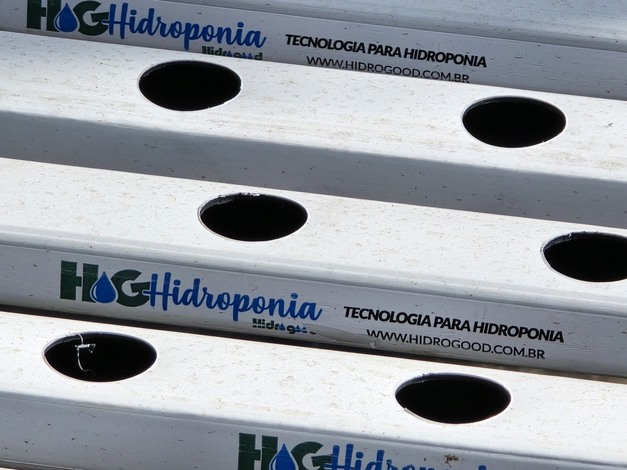 © Pieter Boekhout | FreshPlaza.comThe cultivation gutters come from Brazil
A Greenhouse as a Solution for Drought
Lettuce is popular in Suriname but is not imported. Supply therefore falls short of demand, especially during the dry season. "Then the temperature of irrigation water rises above 27 degrees," explains Rakesh. "Lettuce needs water between 20 and 21 degrees, but most growers don't have the technology to cool it."
Henk and Rakesh opted for Israeli greenhouse technology and shade netting. "All the light enters, but the temperature remains a few degrees lower than outside," says Henk. The structure is being built by the Brazilian Hydro Group, with plastic and irrigation systems from Arco 4G. The lettuce will grow in gutters, with seeds sourced from Dutch seed companies through representatives in South America.
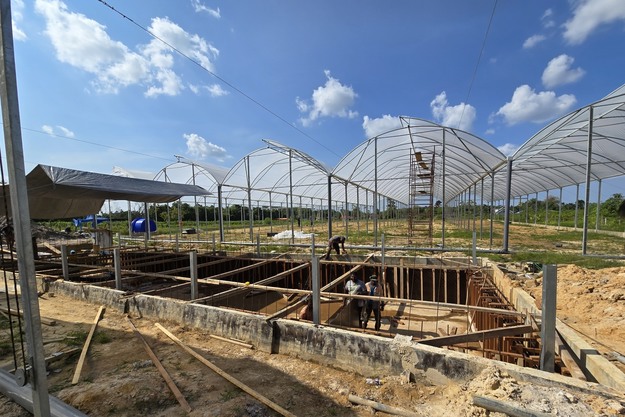 © Pieter Boekhout | FreshPlaza.comIn the middle of the greenhouses is the underground water basin
Interestingly, only four people will work permanently in the greenhouse at first. Thanks to automation, that is sufficient. Finding staff remains a challenge in Suriname. "Although the previous government recognized and addressed the issue by bringing Cubans here," says Henk. "They work hard, which helps."
The Lelydorp site covers over 5 hectares, providing space for future expansion. Plans for a second greenhouse, dedicated to fruiting vegetables such as tomatoes, bell peppers, and cucumbers, are already being developed. The first substrate-based test cultivations have started.
"Even cauliflower is possible," says Rakesh. "I've previously supplied that to Tulip. Beautiful heads of 1.2 kilos. You'd think it's too warm here for that crop, but it works if you approach it correctly." He sees opportunities for a broader range of quality vegetables. Surinamers are traditionally conservative in their eating habits, but are slowly following fast-food trends that increasingly use fresh salad ingredients. "Lettuce, tomato, onion, bell pepper, these are products with growing demand," he says. "And because lettuce isn't imported, every head we grow locally can immediately enter the market."
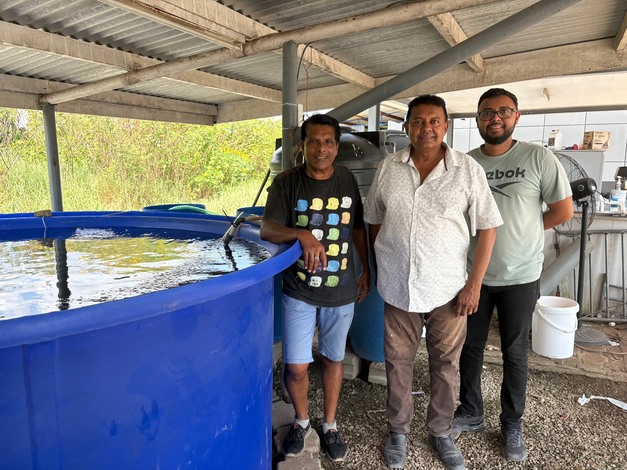 © Pieter Boekhout | FreshPlaza.comTest setup with farmed fish
From Vegetables to Fish
For Henk and Rakesh, Lelydorp is just the beginning. On another 500-hectare site in Coronie, they plan to farm tilapia. "The rivers are polluted with mercury, so there's little freshwater fish left on the market. That makes fish very expensive." There are opportunities in both local sales and export. "The Chinese love tilapia. We can export it in containers. And coconut palms can be planted on the pond banks. But first, let's get the greenhouse in Lelydorp into full production," laughs Henk.
According to both entrepreneurs, the lack of large-scale cultivation in Suriname is not due to a lack of potential but rather a lack of courage, access to financing, and bureaucratic hurdles. Most farmers are older, work part-time, and have no desire to expand.
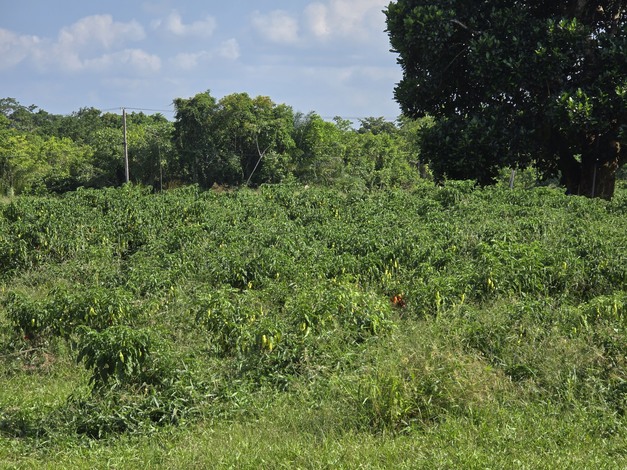 © Pieter Boekhout | FreshPlaza.comOpposite the greenhouses lies another plot of Madame Jeanette peppers
But that's precisely what Henk and Rakesh want to change. "I'm looking for partnerships to make my land profitable," says Henk. And Rakesh adds, "We can't keep waiting for someone else to do it. If you want to change, you have to start with yourself."
For more information:
Henk Kasi and Rakesh Jhagroe
Agro Nature Su NV
Sastrodisoemoweg BR 60 (Suriname)
Tel: +597 863 7282 (Rakesh)
Tel: +597 857 6782 (Henk)
[email protected]
In this special, appeared:
1. Suriname offers many possibilities: plenty of water, land, sun
2. Photo report at the only two supermarket chains in Paramaribo
3. "The acerola supply cannot keep up with European demand"
4. "There will always be demand from the Netherlands for fresh Surinamese vegetables and fruit"
5. Imports in tropical Suriname replaced by local lettuce, bell peppers, and tomatoes from the greenhouse
6. Export of Surinamese bananas to Europe back in sight
7. Dutch fruit importer starts large avocado plantation in Suriname
8. From greenhouse dream to knowledge necessity: Surinamese growers seek a way out of uncertainty
9. Suriname invests in small-scale passion fruit cultivation for export
If you want to know more about cultivation and trade in Suriname, contact Anilkumar Padarath of the Chamber of Commerce and Factories: [email protected]