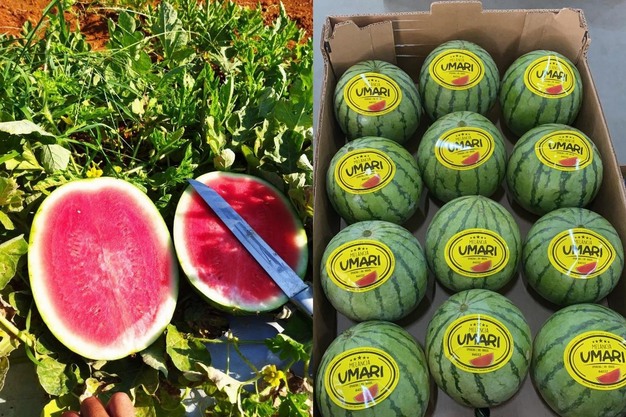
The Brazilian watermelon export season is advancing with good quality and favorable agricultural conditions, but faces a complex commercial situation in Europe, stated Alexandre Pires and Halen Vieira from Agrícola Campo Verde.
The crop has developed well this year, with no major pest incidents and with a quality that we consider to be good," Pires points out. However, the main challenge is not in the field but in the market. "We are competing directly with Spanish watermelons that were not sold on the domestic market, which has led to an excess supply and very low prices," he said.
 © Agrícola Campo Verde
"Currently, the selling price in Europe ranges from 0.55 to 0.60 euros per kilo, levels that do not allow importers to cover their logistics costs. Under these conditions, the importer hardly recovers any expenses and often ends up with losses, which causes tension in the supply chain," he added.
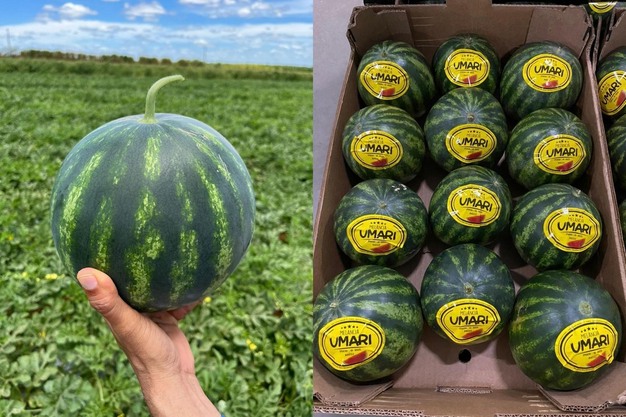
Agrícola Campo Verde exports an average of 7 to 10 containers weekly during the season, which runs from mid-August to mid-March. "In total, the company ships around 250 containers each season. Europe remains the primary destination, with 50% of the volume going to the Netherlands and between 10% and 20% to Spain, while the Canadian market accounts for approximately 30%," he stated.
 © Agrícola Campo Verde
The market in Canada is currently more stable. "Local production is coming to an end, and we don't see any major demand issues," Vieira said. However, the sector is monitoring the trade tensions between Brazil and the United States, particularly following the U.S. increase in tariffs, which led to the suspension of Brazilian exports to that market. "We feared that this would affect the transit of containers to Canada, as many shipments stop in the United States, but for now, the flow remains normal," he explained.
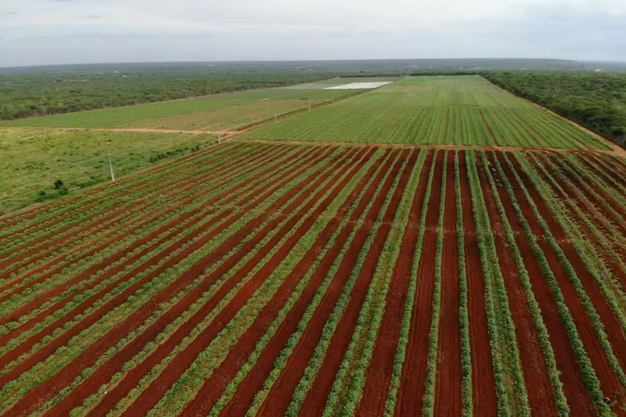 © Agrícola Campo Verde
Domestically, labour shortages are increasingly hindering the sector. "The government's social programs discourage people from working in the fields; many prefer to receive state subsidies rather than work in agriculture," Pires noted.
Adding to these challenges is the impact of the exchange rate. The dollar's nearly 15% decline against the Brazilian real has lowered profit margins on exports. "The combination of low prices, high logistics costs, and an unfavorable exchange rate forces us to rethink strategies to maintain competitiveness," he concluded.
For more information:
Agricola Campo Verde
Alexandre Pires
Sales Manager
Tel. +55 84 98826 8603
Email: [email protected]
Halen Vieira
Director
Tel. +55 84 99138 4577
Email: [email protected]
www.agricolacampoverde.com.br