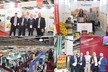
The South African potato sector placed innovation at the centre of discussion during the Potatoes SA Innovation Symposium, held on 23 and 24 July at the CSIR International Convention Centre in Pretoria. The event reviewed current research, explored disruptive opportunities, and examined enablers for a more resilient industry.
Producers in South Africa continue to face higher input costs alongside tighter legislation governing crop protection, water use, biosecurity, and labour. The industry is challenged to move beyond reactive planning and costly inputs toward production systems that address both environmental conditions and consumer demand.
South Africa plants more than 51,000 hectares of potatoes annually, with an average yield of 49 tons per hectare. This is comparable to countries such as Australia and the United States, while exceeding that of several European countries. Potatoes remain an important component of local food security and also play a role in the informal economy through township traders and street food vendors. Author GG Alcock estimates that the kota industry alone generates about R12 billion (US$654 million) per year.
Average production costs for irrigated potato fields stand at R240,000 per hectare (US$13,090). Producers report narrowing margins as break-even prices tighten under climate variability and consumer pressure. In 2000, South Africa produced 1.6 million tons of potatoes on 53,193 hectares at 30 tons per hectare. Today, output has increased to 2.5 million tons on 51,396 hectares at 49 tons per hectare. Per capita consumption has risen from 33 to 36 kg, while the population has grown from 47 million to over 62 million.
Despite higher yields, value remains a concern as the real purchasing power of potatoes declines compared to goods such as coffee, bread, and diesel.

According to agricultural technology analyst Dan Schultz, "the greatest barrier to innovation in potato production is not funding or access to technology – it is the inertia of tradition." Potatoes SA has directed research efforts toward soil health as a foundation for future resilience.
The symposium also addressed the role of input providers, noting that incremental improvements may not be sufficient. Shared risk-and-reward models, branded and traceable potatoes marketed on sustainable practices, and expanded use of data for pest and disease prediction were among the themes under discussion.
The 2025 Potatoes SA Innovation Symposium concluded with calls for producers, researchers, suppliers, policymakers, and innovators to consider strategies that focus on value alongside volume, with attention to consumer interest and production practices.
 © Potatoes SAFor more information:
Dirk Uys
Potatoes SA
Tel: +27 (0)12 349 1906
Email: [email protected]
www.potatoes.co.za