A new global study published in Nature Food (May 2025) assessed food self-sufficiency across 186 countries, focusing on national production of seven key food groups in relation to dietary needs. While only Guyana achieved full self-sufficiency across all categories, several African countries performed notably well in fresh produce, specifically fruits, vegetables, and legumes.
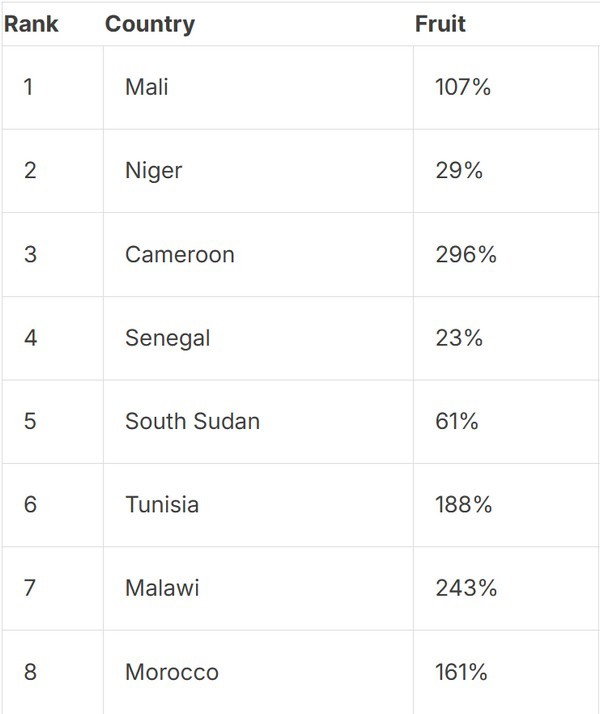
Eight African countries ranked among the top 50 most self-sufficient nations for fresh produce, despite ongoing challenges like political instability and economic strain. These include Mali, Niger, Cameroon, Senegal, South Sudan, Tunisia, Malawi, and Morocco. Their inclusion highlights the continued importance and resilience of small-scale and subsistence farming across the continent.
 © CediRates
Cameroon and Malawi, for example, produce over twice the national demand for fruit, while Tunisia and Morocco also demonstrate strong output in this category. Legume and vegetable production also remains robust in many of these countries, helping to meet domestic nutritional needs despite broader agricultural constraints.
However, climate shocks, underinvestment in infrastructure, and limited access to technology continue to hinder progress. Even with strong fresh produce capacity, systemic inefficiencies often prevent countries from consistently fulfilling dietary requirements. The study emphasizes that self-sufficiency scores above 100% suggest surplus production, while those below indicate continued reliance on imports.
Source: CediRates