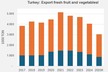
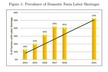
The Institute for Macroeconomic and Regional Studies (IMRS) released its index calculations evaluating the diversification of Uzbekistan's fresh produce export markets from 2019 to 2024. The findings demonstrate a moderate level of diversification in these years. While there has been some increase in export destinations, a large share of exports continues to be concentrated in certain markets.
The index leverages the inverse of the Herfindahl-Hirschman Index, which gauges the distribution of exports among trading partners. Scores above 0.85 show high diversification; those under 0.75 suggest low diversification. Uzbekistan's scores stayed between 0.75 and 0.85, categorizing the diversification as mid-range.
By 2024, Uzbekistan expanded its fresh produce export destinations from 68 to 73 countries. However, the primary five importers notably accounted for a large portion of exports, rising from 78% in 2019 to 83.8% in 2022. In 2023, the principal markets were Russia (38.7%), Pakistan (13.5%), Kazakhstan (12.6%), China (8.9%), and Afghanistan (8%). The diversity of destinations increased, yet the main export volumes remain highly concentrated.
The contribution of exports to CIS countries shifted from 69.4% down to 57.7%, though it remains prevalent. Meanwhile, the share of the European Union market saw minimal growth, inching up by 0.3 percentage points over five years, from 2.1% to 2.4%.
Source: Kursiv Media