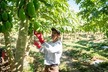
For years, maize has been Tanzania's primary crop, forming the backbone of smallholder agriculture. The reliance on maize farming is limiting income potential, with fluctuating prices and unpredictable weather patterns posing challenges. However, demand for high-value fruit crops like mangoes, avocados, and papayas in international markets presents an opportunity for diversification.
The growing global interest in fresh and organic produce is driven by shifts toward health-conscious consumption habits. Despite fruits being seasonal with climate constraints, Tanzania's climate and soil conditions give its farmers a competitive edge in meeting regional and global demands. The country's potential is demonstrated by a recent generation of $2.32 billion from the export of 1.57 million tons of fruits and legumes, indicating the economic growth potential linked to fruit farming. However, realizing this potential requires additional support and investment.
Government initiatives are paving the way, promoting fruit farming as part of a broader strategy for agricultural diversification and increased farmer income. With nearly one million fruit tree seedlings being distributed to farmers, foundations for increased fruit production are being laid. Furthermore, efforts to strengthen cooperatives include the inspection of over 7,000 cooperative societies with an aim to enhance governance through training for officers, leaders, and executives. Plans also entail training more extension officers by collaborating with stakeholders on existing farmer training programs. Yet, support for market development and post-harvest opportunities remains necessary for impactful progress.
Organizations like One Acre Fund are aligning with government efforts by offering agronomic training, post-harvest support, and market linkages, aiding farmers in making fruit farming profitable. With market access being key to success, One Acre Fund is facilitating this by securing export permits and associating with local processors. For instance, export permits for Tanzanian cashew nuts to the Netherlands have been acquired, while collaborations with processors like Listram (Mama Cashew) in Mtwara ensure quality control and added value for international buyers. Applying this model to fruit crops is on the agenda.
Post-harvest handling challenges persist. Improved training and investment in local processing infrastructure could mitigate losses, maintain quality, and enhance marketability.
Capitalizing on fruit tree farming offers Tanzanian smallholders pathways to improve livelihoods, diversify income, and respond to climate and market unpredictability. The increasing demand for high-value fruits calls for scaling support, going beyond planting to building a comprehensive ecosystem with training, infrastructure, and stable market access. A coordinated effort involving the government, the private sector, and development partners can unlock fruit farming's potential, positioning it as a high-value sector supporting sustainable development.
Source: The Citizen