In 2024, USDA's Economic Research Service reported a per capita domestic availability of fresh vegetables in the United States at 148 pounds, reflecting a 3% decline from 2023. This figure highlights shifts in consumption trends and potential supply chain challenges, despite excluding food loss and waste considerations.
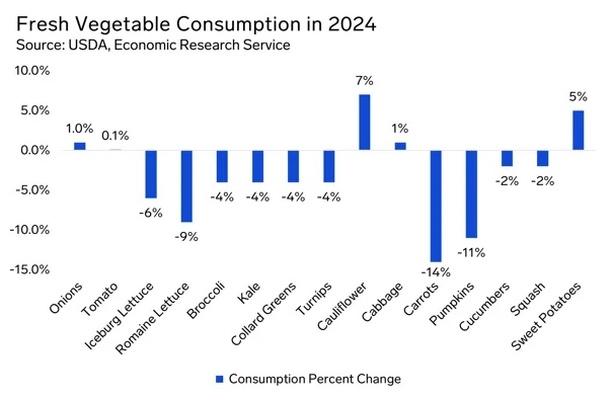
Amidst the overall decline, onions and tomatoes maintained stability: onions rose by 1% to 21 pounds per capita, while tomatoes had a minor increase of 0.1% to 19 pounds. These changes, though minimal, stand out against the broader declining backdrop.
 © Mintec/Expana
Click to enlarge
The lettuce category experienced noteworthy changes. Iceberg and romaine/leaf lettuces dropped by 6% and 9% respectively, reducing total per capita availability to 28.6 pounds. Iceberg lettuce hit a record low of 12.4 pounds from 24 pounds in the 1990s, reflecting a long-term downward trend. Meanwhile, romaine and leaf lettuces rose from 6 pounds in the 1990s to 17 pounds in the 2020s, despite the recent dip.
Among Brassica crops, availability patterns varied. Broccoli and leafy greens like kale, collards, mustard, and turnip greens faced a 4% decline. Conversely, cauliflower and cabbage saw increases of 7% and 1% in availability, respectively.
In vegetables with 5 to 10 pounds per capita availability, declines were prevalent. Carrots experienced a 14% decrease to 7 pounds, with pumpkins decreasing by 11% to 5 pounds. Cucumbers and squash each dropped by 2%, while sweet potatoes increased by 5%, reaching 5.6 pounds per person.
Source: Mintec/Expana