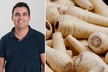
Ginger farmers in Nigeria have appealed to the Federal Government for intervention in the challenges impacting the ginger sector. Jerry Tobi, National Youth Representative, Youth in Agribusiness, addressed the Minister of Agriculture and Food Security, Senator Abubakar Kyari, urging action to prevent the industry's collapse.
Tobi, representing over 100,000 ginger farmers, highlighted issues like rampant fungal infections, lack of disease-resistant seed varieties, and escalating production costs. Although a N6 billion facility was disbursed in 2024 through the National Agricultural Development Fund, Tobi stated this alone is insufficient for addressing the challenges.
He reported widespread outbreaks of Ginger Blight, including rhizome rot and bacterial wilt, affecting yields. Farmers face production costs exceeding $10,000 per metric ton, compared to the global average of $2,000 to $3,000. The price of ginger seeds has risen to over $390 per bag, making planting unattainable for many.
Nigeria is losing market share to countries like India and China, impacting export destinations. Tobi linked the decline to rising youth unemployment, leading to insecurity in rural areas. Many young farmers face economic despair, resulting in increased rural-urban migration and unemployment.
Nigeria previously produced 523,000 metric tons of ginger annually, valued at $1.3 billion globally. However, disease and high costs have caused a decline, with farmers losing over 90% of expected yields, equating to a loss of 313,800 metric tons annually. This translates to a financial loss of $784.5 million, approximately $1.2 billion annually. Monthly losses are about $65.4 million, while daily losses are estimated at $2.1 million.
Farmers are losing between $13,000 and $19,500 annually per farm, totaling $1.3 billion in losses. Tobi warned of potential exclusion from the international ginger market, worsening Nigeria's foreign exchange crisis. He urged the government to establish a National Ginger Seed Bank, create input clusters with subsidized packages, and invest in research and development.
Recommendations include establishing a Ginger Research and Development Institute and an emergency intervention fund for farmers, with a minimum $26 million revolving loan. Importation of disease-resistant seed varieties and restricting ginger exports for two years are also suggested to stabilize local production.
Tobi emphasized collaboration with the government, stating farmers are not seeking handouts but strategic action to protect an industry with the potential to generate over $5 billion annually for Nigeria.
Source: Punch