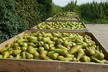
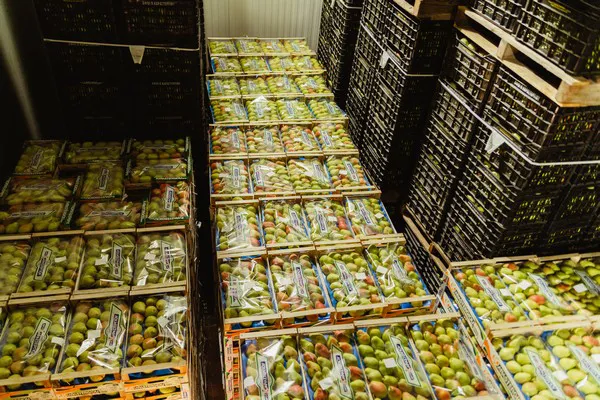
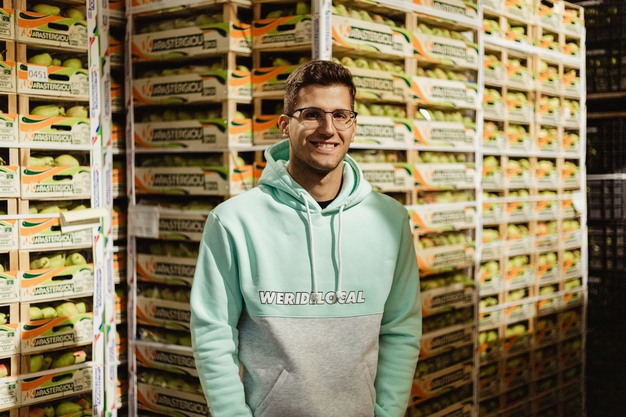
The Greek pears are sitting comfortably in the cold chambers, says Greek pear exporter Paris Karastergios, of Karastergiou Bros: “The Greek pear season is in full swing. Harvest is now finished and we are storing the harvested fruit in cold chambers to last us the reast of the season. Looking at the Greek pear season, it’s a promising one this year. We see growing demand for all of our varieties and not just from our existing clientele, but there’s also quite a few inquiries from new contacts, which are based in different countries than our usual markets.”
Although the Greek exporter has a stable market to offload the product in, Karastergios states that they are also seeing demand from potentially new markets, which they’re eager to start supplying. “You can find our pears in countries in the Middle East, in Israel and in Jordan, mostly. However, we also send smaller quantities of pears to Saudi Arabia, Oman and Dubai. In the past few years we have also been selling to European countries, such as Italy, Czech Republic and even Germany. We’re always open to explore more markets. Given the interest from new territories, we expect to be able to try out some of these new countries and send some shipments this season.”
Competing against giants from Spain and Turkey, with lower volumes
In some of their current markets, the pears of the Spanish competition are preferred. However, some varieties are gaining more popularity in countries like Israel, Karastergios explains: “Spain is pretty much the second biggest competitor when it comes to the export of our pears, right behind Turkey. They have offered Ercolini pears to the countries of the Gulf for many years, and as a result consumers tend to prefer Spanish pears over Greek ones in these countries. They have been the largest exporter of Blanquilla pears too, a variety really appreciated in a country like Israel. That being said, our Blanquilla pears have been gaining more and more appreciation from the Israeli consumers, when compared to the Spanish ones.”
It might be difficult to compete with the volumes that the competitors can produce. In their turn, Greek production is actually falling this season due to the harsh and difficult weather conditions, Karastergios states. “For Greece, the overall pear volumes have dropped this season when comparing these volumes to the previous campaign. We’re looking at a decrease of approximately 20 per cent, mainly due to bad weather conditions during the blossoming of the pears. However, the biggest challenge this season was dealing with the late spring’s hailstorms, which affected a very large part of the main pear production area, in Thessaly.”
The heat of the Greek wildfires
Greece has been hit with wildfires, but the fields of Karastergiou Bros have not been affected. However, other pear farmers have lost their entire production: “As a country, we’ve been dealing with wildfires lately. Thankfully, these wildfires were not close to our company’s premises nor to the pear fields. Not everyone has been so lucky though, and some of the other main farmers have completely lost their fields and definitely this year’s production due to these fires. It’s a very sad sight to see our country being set on fire every summer, and we are always afraid that our area will be the next one to catch fire. It would be devastating for us to lose an entire year’s worth of production.”
Next to the extreme wildfires, the general heat has also proven to be a challenge, as workers can’t be expected to be out in the fields all day during these high temperatures, Karastergios explains. “It's not just wildfires we have been dealing with in recent years. Heatwaves have been a real struggle during the pear picking season, preventing pickers from working full time, and testing our refrigerating equipment’s endurance to the absolute limit. Higher temperatures didn’t affect the pears themselves too much, mainly because when the temperature rose pears were already in the process of being harvested.”
The future of Greek pears
More production isn’t in the future for the most important pear varieties, but that doesn’t mean production won’t increase overall. However, growers focus on different pears that can be sent to the processing industry, rather than be exported fresh: “The acreage of the three main Greek varieties, which are Coscia, Santa Maria and Blanquilla, isn’t expected to increase over the next few years. In fact, it is most likely going to decrease a little more in the future. However, the overall acreage of pear cultivation tends to increase in the near future. Instead of these three varieties, as well as stone fruits as peaches and nectarines, growers tend to plant more and more varieties of pears that can be used in the canning industry too, other than consumed fresh. Suitable varieties for this destination would be Highland, Williams, and Sissy pears.”
A new pear variety is on the horizon, “Our Coscia campaign is finished at this point, after which we started to focus focus on Santa Maria pears. Our company, Karastergiou Bros, is a company aiming to become a leader in the pear market. As such, we are trying to introduce a new pear variety, with very different characteristics than the ones already existing in Greece.”
For more information:
Paris Karastergios
Karastergiou P. Bros S.A.
Tel: +30 24610 26940
Mob: +30 693 2469117
Email: [email protected]