In its recent Food Inflation Brief, the Bureau for Food and Agricultural Policy (BFAP) stated that although food inflation was still high, its sharp decline in May provides a first solid indication of a turnaround in food prices. The BFAP expects the downward trend to persist over the coming months.
BFAP identified load-shedding and the associated cost of alternative energy sources as a major cost driver across the value chain, which might offset some of the decline at retail level. Another depreciating cycle in the value of the rand was an additional threat.
According to Statistics South Africa, vegetables recorded a lower year-on-year inflation rate than in April 2023, but the highest year-on-year inflation of all categories at 20,8%. Bread and cereal inflation was also lower year-on-year than in April 2023, but at 18,1% the second highest year-on-year among the categories.
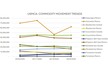
Food inflation in South Africa was higher than any of the selected countries, save the EU, in May 2023. This is in line with observation from April 2023. These countries include China, with a food inflation rate of 1%, Brazil with a food inflation rate of 5,5%, the US with a food inflation rate of 6,7%, Zambia with a food inflation rate of 11,6%, Kenya with a food inflation rate of 11,8%, and the EU with a food inflation rate of 15%.
Source: farmersweekly.co.za