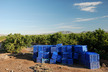
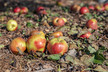
Australian fruit and vegetable growers are losing up to 1 million tons of produce annually that does not reach the market, representing around US$1.65 billion per year.
Data indicates that horticulture operations experience average food loss rates of about 20 per cent per farm, with growers absorbing the costs of seed, water, fertiliser, crop protection, and labour. The broader economic impact is estimated at US$24.2 billion annually, equivalent to around 1.4 per cent of GDP.
In response, a national research program led by End Food Waste Australia has been launched to address surplus and on-farm losses. The initiative will involve growers in trials to measure loss points and test approaches to improve the utilisation of harvested product.
The program will review product specifications, identify commercial pathways for surplus and out-of-spec produce, and develop farm-level resources. It is funded through Hort Innovation's Frontiers program with government co-investment.
Director of Research, Development, and Extension Francesca Goodman-Smith said the project will focus on industry-wide solutions. "International trials have shown growers can increase profitability by up to 20 per cent through food waste reduction. When food isn't sold, it's not just the food that is wasted, it is also the fertiliser, water, labour, and opportunity cost of using that land."
Hort Innovation's General Manager of Production and Sustainability, Anthony Kachenko, said the program will support growers in improving returns. "Australian growers produce some of the best horticulture products in the world and work hard to get them to market. This national program will support our growers by providing practical, commercially realistic tools to maximise value from each harvest."
Consumer research will examine preferences and product specifications, including cosmetic and size standards that influence sales. Rowan Little from Montague Farms noted that secondary markets can improve utilisation. "Just because fruit has a cosmetic defect doesn't mean it's inedible. We've reached almost 100 per cent crop utilisation for our apples through secondary markets to cider and juices, and are looking at the same for plums. If we can unlock value in new markets and sell more from every crop, that's good for growers and good for the whole supply chain."
The program will produce measurement tools, training materials, and case studies based on farm data, with findings made available to support adoption across the sector.
Source: Nambucca Valley News