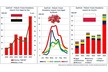
Chile's cherry industry has shifted from rapid expansion to increasing market pressure. Production has grown from 7,000 tons in 2001 to 625,000 tons of exports in 2025, with total output higher when non-exported fruit is included. The sector generates around US$3.5 billion annually and has expanded to approximately 82,000 hectares, with growers replacing other crops such as apples and vineyards.
Export growth has been largely driven by China, which absorbs around 92% of volumes. Out of 114 million 5 kg boxes produced, about 98 million are shipped to this market. However, demand conditions are changing, and alternative markets such as the United States, Vietnam, and the Middle East remain limited in scale.
Supply growth has outpaced demand. Exports increased from 386,000 tons in 2023 to 625,000 tons in 2025. At the same time, a shipment of approximately 25,000 tons was lost due to transport issues, highlighting logistical risks.
Market dynamics are also shifting. Cherries are moving from a gifting product to a regular consumer item, increasing focus on quality and value. Long transit times of up to 40 days from harvest to retail are affecting firmness, taste, and shelf life, reducing competitiveness in destination markets.
Demand is concentrated on larger fruit sizes, particularly 28 mm, 30 mm, and 32 mm, with smaller sizes losing market share. Only about 30% of production meets these specifications. Certain varieties are also being reduced due to performance during long transport.
Financial returns have weakened. In 2024, production costs averaged around US$2 per kilogram, while returns were about US$1 per kilogram. In 2025, prices ranged between US$1.50 and US$3 per kilogram for higher-quality fruit, with continued variability. Packing costs are approximately US$1.60 per kilogram, alongside harvesting, logistics, and marketing costs.
The sector operates largely without fixed sales contracts, with exporters shipping fruit on consignment. At the same time, pre-season financing from buyers has declined, and access to credit is tightening.
Structural pressure is increasing across the value chain. Chile has around 300 exporters operating under about 900 brands, contributing to inconsistent quality. Several exporters have already exited the market, and others are under financial strain.
Industry estimates suggest that export volumes may need to decrease by around 30% to approximately 400,000 tons to restore balance. Production is expected to continue increasing, with potential output reaching 800,000 tons as younger orchards enter production.
Alternative crops such as apples, kiwifruit, stone fruit, and hazelnuts are being considered, although switching crops requires long-term investment. The sector is evaluating adjustments, including reduced planted area, improved quality control, logistics improvements, and market diversification beyond China.
Chile's cherry sector remains active, but current conditions reflect changes in supply, demand, and pricing, with further adjustments expected across production and trade.
To view the full report, click here.
 © GP GradersFor more information:
GP Graders
Tel: +56 75 2382454
www.gpgraders.com