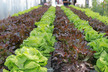
Yuma farmers, who supply a large share of the United States' winter lettuce and vegetable production, are monitoring ongoing negotiations over the future allocation of Colorado River water.
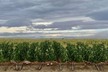
According to grower Matt McGuire, the region includes around 210,000 acres (85,000 hectares) of farmland, with approximately 170,000 acres (68,800 hectares) dedicated to vegetable production. "Yuma is special. It's kind of unique," McGuire said.
The region's output has led to its position as a key winter vegetable supply area. "More than likely, if you're eating a leafy green, you're eating something that came from Yuma right now," McGuire said.
Water from the Colorado River is delivered to farms through a canal system. Growers indicate that continued production depends on maintaining these flows. "We might have a complete disaster along the river. That would be my fear," McGuire said.
Despite holding long-standing water rights, growers remain concerned about the outcome of federal negotiations on future water allocation. "If they start allocating the water as they see fit, it might be hard to undo that," McGuire said. "Like if they give the cities priority over the people who have water rights now."
Local authorities have also raised concerns. Yuma Mayor Doug Nicholls and the city council submitted formal comments to federal officials requesting protection of existing water rights. "It is very frustrating, we are here, nearly the 11th hour," Nicholls said.
Officials note that a reduced water supply could affect multiple sectors. Yuma relies on the river for energy generation, as well as for parks and recreation. "It's not just water," Nicholls said. "There are other things that we depend upon every day that are really at risk with this conversation."
Farmers and local authorities report that conservation measures and technology have already been implemented to reduce water use. "What we're not saying is we want all of our water, you guys figure it out, we're not isolating ourselves," Nicholls said. "What we want is to be at the table, to make sure the solutions that are coming forward work."
Growers state that reduced water availability could affect supply volumes during the winter period. "If people think about what they put on their kitchen table, the last four, five months, 80% of it came from here," McGuire said. "And think about if we don't have water, and we don't farm, take those things off the table, off and on for most of the winter. That's why we need Yuma."
A new agreement on Colorado River water allocation is required by October 1.
Source: ABC 15