The start of the Mercosur-European Union agreement and current geopolitical conditions are expected to influence Brazilian fruit exports, according to industry representatives speaking during Fruit Attraction São Paulo 2026.
Guilherme Coelho, president of the Brazilian Association of Fruit and Derivative Producers and Exporters (Abrafrutas), said the agreement will lead to gradual tariff reductions for Brazilian fruit entering the European market. Grapes will have a zero tariff when the agreement takes effect. Avocados will move to zero from 4 per cent within four years, lemons and limes from 14 per cent within seven years, melons and watermelons from 9 per cent within seven years, and apples within ten years.
"The gradual reduction of tariffs will expand the presence of Brazilian fruits in the European market, which already absorbs about 70% of our external sales in the sector," Coelho said.
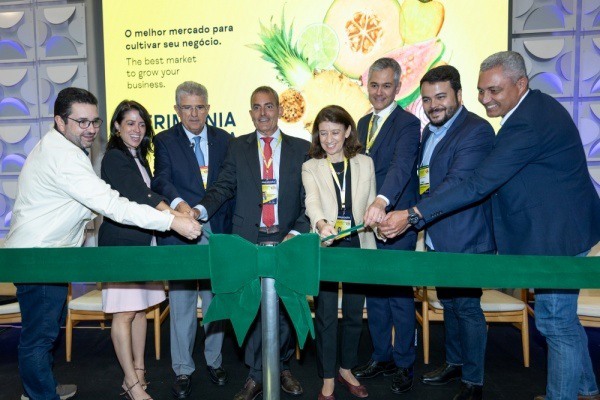 © Fruit Attraction
Felipe Serigatti, PhD in Economics and coordinator of the Master's in Agribusiness at Fundação Getúlio Vargas (FGV), said Brazilian agricultural exports are expected to maintain volume growth, although prices are likely to remain stable, resulting in tighter margins.
He noted that geopolitical developments are influencing freight costs and trade routes. "All of this is reflected in higher freight costs for everyone. However, the turbulent situation in the Middle East, which interferes with trade routes, could represent a window of opportunity for Brazilian fruit, especially dried fruits, since competing countries in this category, which depend on export corridors in that region, are in a worse situation than Brazil regarding the cost of transportation and the flow of goods."
Fruit Attraction São Paulo 2026, organised by IFEMA Madrid and Fiera Milano Brasil, brings together producers, exporters, buyers, and other sector participants in São Paulo.
In 2025, the event recorded more than 16,300 visitors, 400 exhibiting brands from over 60 countries, and more than 1,500 business meetings. Sales generated exceeded R$ 1 billion (US$200 million), with exhibition space reaching 15,000 square metres.
For the 2026 edition, organisers expect sales to reach between R$ 1.2 billion and R$ 1.5 billion (US$240 million to US$300 million). Buyers from 16 countries are participating in business meetings, including representatives from Europe, Asia, and the Americas.
The event is scheduled to continue through to 2033 following an extension of the partnership between organisers.
Source: Fruit Attraction Press Office, Ronaldo Luiz, Abrafrutas