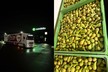
The situation in Moldova's grape sector remains unclear. In January and February last year, exports reached slightly more than 6,000 tons. In total, 10,200 tons of grapes from the 2025 harvest were exported in 2024. This suggests that in 2026, total exports from the previous harvest could reach double the level recorded in 2025. However, in 2022, winter-to-spring exports exceeded 25,000 tons.
Industry discussion is not focused only on volumes, but also on the approach to exports during this period. In Western Europe, table grapes are mainly sold during the high season. In Italy, grapes are harvested and placed on the market on the same day. While cooling is applied, storage for extended periods is limited. Varieties with higher storability exist in Italy and Spain, but sales are generally completed by November.
In Moldova, grapes are often stored and marketed during winter and spring. This approach has been supported by the availability of late-ripening "Moldova" variety grapes with storage capacity, and access to CIS markets where this variety is widely accepted. In addition, demand for this product has appeared in some EU and Middle East markets.
Industry participants indicate that in certain seasons, it may be viable to store 10,000 to 12,000 tons for sale in the first months of the year to reduce pressure on autumn prices. However, most production is expected to be marketed during the harvest period when product quality is optimal.
In 2025, market conditions included higher yields, lower quality, and lower prices. As a result, some growers stored larger volumes of grapes that were not suitable for long-term storage. This has contributed to higher export volumes in early 2026.
Export destinations and pricing reflect current conditions. In January and February, Moldova exported more than 3,000 tons to Iraq. Export grapes require manual sorting, increasing costs. At the same time, buyer prices have been in the range of US$0.50 to US$1.00 per kg, compared to levels around 50 per cent higher in the previous season.
In March, prices offered to growers declined from approximately US$0.27 to US$0.33 per kg to US$0.16 to US$0.22 per kg within one week. As one grower stated, "if at the beginning of the month the price covered the costs of storage, manual sorting and packaging, now it covers only the packaging and probably some other small things".
Processing outlets are also offering lower prices. Some wineries are purchasing table grapes for processing at around US$0.11 per kg, compared to US$0.33 to US$0.38 per kg in previous seasons. Under these conditions, some producers are focusing on limiting losses.
Source: Logos Press