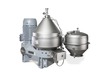
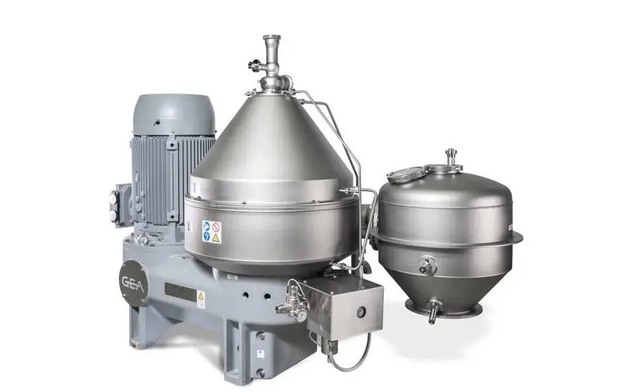
The global citrus industry is facing reduced juice output linked to citrus greening (HLB) and lower raw material quality. In response, GEA has introduced the GSE 150 CPR centrifuge, designed for medium-capacity processors handling variable fruit conditions.
The system is developed to manage fluctuating solids and lower juice content associated with HLB-affected fruit. It uses a pressurised constant pulp removal system, allowing continuous operation under variable input conditions.
The launch comes as Brazil, the largest citrus producer, reports around 48 per cent of its Citrus Belt affected by greening. In addition, drought conditions in 2025 reduced rainfall by 55 per cent, contributing to orange juice concentrate stocks falling to 146,300 tons.
 © GEA
© GEA
"When raw fruit quality and solids content fluctuate more strongly, process stability becomes an economic lever," says Rüdiger Flocke, area sales manager at GEA. "The GSE 150 CPR continuously discharges pulp under pressure, making clarification processes more robust and reducing product losses."
The unit differs from conventional clarifiers by using a separating disc and a second centripetal pump, enabling pulp discharge under constant pressure of up to 4 bar.
Under high loads, conventional systems may require up to 30 solids discharges per hour, while the GSE 150 CPR operates with two to four. Continuous discharge allows higher throughput and reduces product losses linked to carryover.
The system can process around 50 per cent more volume compared to standard separators of similar size. Fewer discharge cycles also support yield recovery, particularly where raw material costs are elevated.
The unit includes an option for automatic control of pulp discharge based on viscosity measurement. This supports the adjustment of pulp levels during processing and reduces the time required for product changeovers.
The centrifuge is rated for up to 17,000 litres per hour for orange juice and 12,000 litres per hour for lemon juice. It can also be used for pulp washing and cloudy peel extract.
The model is positioned between larger and smaller units in the company's range and is intended for use in regions including Egypt, Turkey, and Southeast Asia. It is designed for continuous operation and includes stainless steel construction, clean-in-place capability, and a belt drive system.
Monitoring systems are available to track equipment performance and support maintenance planning during operation.
Source: Food & Drink Technology