In many export orchards, sunburn quietly reduces the share of fruit reaching premium grades. During hot summers, losses of 10–30% are not uncommon when fruit surface temperatures rise beyond safe levels. What begins as heat stress in the canopy can ultimately translate into thousands of lost revenue per hectare at grading.
Heatwaves above 35°C (95°F) are becoming more frequent in many fruit-growing regions. Under clear skies, fruit surfaces can reach temperatures 10–15°C higher than the surrounding air, especially on exposed canopy sides. When this happens, trees begin to experience heat stress: stomata close, transpiration slows, and photosynthesis declines. These physiological responses often occur days before visible damage appears on fruit.
The final impact varies by crop. Citrus can develop rind injury at high fruit temperatures, grapes may show necrotic berry spots and shrivelling, and crops such as pears, walnuts, olives, and stone fruits can see substantial reductions in packout during severe heat events.
 © Lumiforte EMEA BV
Why timing determines the economic outcome
Sunburn usually develops through several stages as fruit temperature and radiation increase. At extreme fruit temperatures (around 52°C / 126°F), sunburn necrosis causes irreversible tissue damage. At slightly lower but prolonged heat levels (around 45–49°C), sunburn browning develops, reducing fruit quality and lowering grade. A third form, photo-oxidative sunburn, can occur when previously shaded fruit is suddenly exposed to intense sunlight after pruning or canopy loss.
Once visible damage appears, the fruit's premium value is already lost. The economic benefit, therefore, comes from keeping fruit surfaces cooler before heat damage begins.
Recognising heat stress before damage appears
Orchards usually show warning signals before sunburn becomes visible. Monitoring canopy conditions can help growers identify when heat stress is building.
Simple field checks can reveal early stress. Comparing leaf temperature with ambient air temperature using an infrared thermometer can indicate when the canopy begins to overheat. Subtle leaf curling, drooping during the hottest hours, and large temperature differences between shaded and exposed fruit can also signal rising risk.
Heat stress also tends to concentrate in specific areas of the orchard, such as young blocks, recently pruned rows, outer canopy edges, and west-facing rows where afternoon heat accumulates.
What sunburn really costs per hectare
The economic impact becomes clear with a simple apple block example. A 60-tonne per hectare crop sold at premium prices can generate strong returns, but even moderate sunburn can quickly reduce revenue.
If 15% of the fruit drops to a lower grade, losses can reach several thousand per hectare in a single season. Growers still pay the same harvesting, packing, and storage costs, meaning labour expenses remain unchanged even when fruit value declines.
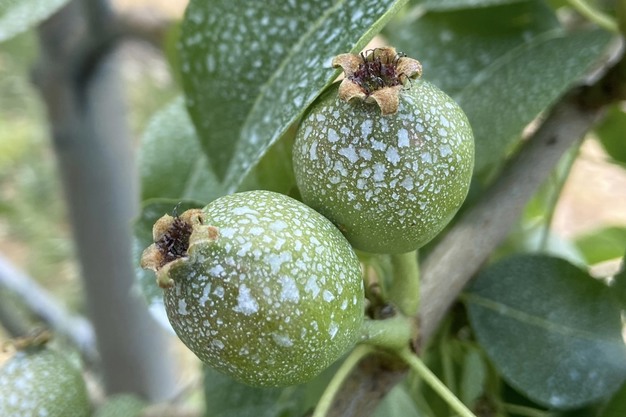 © Lumiforte EMEA BV
How protection pays back
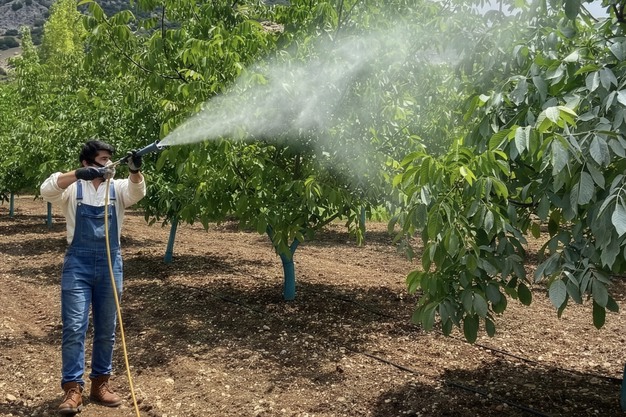
Several approaches are used in orchards to reduce sunburn risk. These include kaolin films, shade nets, over-tree cooling systems, and newer sprayable reflective coatings such as Cropshader Orchard, which are applied to help keep fruit and leaves cooler during hot periods.
Field experience shows these tools can significantly lower fruit surface temperatures during extreme heat events. Even small reductions in temperature can protect a larger share of fruit from downgrading at harvest.
Across many orchards, reducing sunburn damage from around 15% to 5% can recover several tonnes of premium fruit per hectare, often covering the cost of protection within a single season.
As heat events become more frequent, growers are increasingly evaluating these protective technologies before peak summer conditions arrive.
Cropshader shares more about how to calculate the economic impact of sunburn protection in an orchard in this article.
For more information: 
Cropshader
[email protected]
www.lumiforte.com