Florida is experiencing its driest conditions in 25 years, adding pressure on a citrus sector already affected by disease, hurricanes, and rising production costs.
According to the U.S. Drought Monitor, all of Florida is experiencing some level of drought, with more than 75 per cent of the state in extreme drought conditions. The dry conditions are increasing costs for growers who depend on irrigation to maintain citrus production.
Florida accounts for 17 per cent of total U.S. citrus production, according to the Florida Department of Agriculture and Consumer Services. For many communities, citrus production remains an economic activity.
"There are multiple companies across our county and across our state, and it's definitely a lifeline to a lot of Floridians here," said Jennifer Schaal, VP of finance at Dundee Citrus Growers Association. "It's what they depend on."
Florida's citrus acreage has declined over time. In 2000, the state had more than 800,000 acres under citrus production. Today, acreage stands at just over 200,000 acres, according to the U.S. Department of Agriculture. Industry representatives point to citrus greening disease and repeated hurricane damage as key factors.
"The number one challenge the industry has had over the years is citrus greening disease," said Steven Callaham, executive vice president and CEO of Dundee Citrus Growers Association. "And then on top of that challenge, we've experienced numerous hurricanes."
Freeze events and drought conditions have added further pressure. Irrigation costs have also increased due to energy requirements.
"When you irrigate, it requires a pump that is either powered by diesel or it's powered by electricity, and it gets very, very expensive," said Callaham.
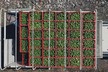
Growers are increasingly using Citrus Under Protective Screens (CUPS), where citrus trees are grown under screened structures.
"It's been challenging over the last year," said Bill Bohde, director of agronomy at Dundee Citrus. "During the bloom period, water is critical. It determines how well the fruit sizes and ultimately, you know, how large your crop will be."
Under the system, trees are planted under 10-acre screened structures known as pods. The system was originally introduced to reduce disease pressure, but is also used to manage irrigation.
"Everything is pumped through a series of pipes into this black tubing, and every tree has a very small emitter that puts, you know, puts out an amount of water," said Bohde.
According to Callaham, a 10-acre pod can produce between 8,000 and 10,000 boxes of citrus.
USDA production data show mixed results across citrus categories. Florida lemon production increased 4 per cent compared to last season, tangerine and tangelo production remained unchanged, grapefruit production declined 8 per cent, and non-Valencia orange production declined 2 per cent.
Source: Fox Business