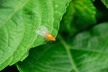
South Africa's Department of Agriculture, Forestry and Fisheries has reported the detection of the oriental fruit fly (OFF) in Grabouw. The pest was identified in fruit using a protein-baited trap.
The oriental fruit fly, Bactrocera dorsalis, is an insect native to Asia and previously described in Africa as the invasive fruit fly. The department stated that commercial fruit crops at risk include mangoes, guavas, citrus, papayas, apples, pears, apricots, peaches, cherries, grapes, passion fruit, peppers, and tomatoes.
According to the department, the pest could lead to food insecurity, yield reduction, market restrictions, and increased production and post-harvest costs if not controlled.
The trap that detected the pest was serviced by FruitFly Africa (FFA), which reported the detection to the department. Following the detection, authorities established a quarantine zone with a five-kilometer radius around the detection point.
A delimiting survey was initiated, and growers, packing facilities, and processing operations handling host material were placed under quarantine. Eradication measures were also initiated within a 25-square-kilometer area around the detection site.
Hugh Campbell, general manager of Hortgro Science, said the industry has been preparing for the possible occurrence of the oriental fruit fly in the Western Cape for more than a decade. Hortgro Science's Crop Programme has conducted research since 2005 to prepare for potential detections.
Campbell said 1,400 monitoring traps are currently in place in the Elgin, Grabouw, Vyeboom, and Villiersdorp region. These traps are part of an area-wide monitoring and control program managed by FruitFly Africa.
"Immediately after the first OFF was caught, the national action plan was implemented.
"A removal permit based on control and containment actions is now required to move the host material to a pest-free area."
Campbell added that the delimiting survey is intended to determine the spread of the fruit fly. Weekly control measures are being implemented by growers and FruitFly Africa.
He explained that if no additional flies are detected in the monitoring traps over a period of 12 weeks, equivalent to three generations, the pest will be considered eradicated, and quarantine restrictions may be lifted.
The oriental fruit fly was first recorded in Kenya in 2003. It has since established populations in Limpopo, Mpumalanga, North West, and parts of KwaZulu-Natal in South Africa.
"It is an evasive fruit fly that can cause considerable damage."
Source: Cape Times