 © Sun World LLCThis year, Sun World celebrates its 50th anniversary and CEO Bernardo Calvo discusses what has changed most in the world of breeding over five decades. "It's the scope of what breeding is expected to deliver," Calvo says. Early on, success was measured by whether a single variety worked well in one place. Today, success is defined by whether an entire portfolio can deliver a consistent eating experience across regions, seasons, and supply chains.
Fruit needs to consistently produce and eat well
As a result, breeding has become much more systems driven. "We now think in terms of early-to-late coverage, reducing variability, and creating repeatable consumer experiences," he said. Data, global trials, and faster learning cycles allow for Sun World to be more intentional in how genetics are built and advanced. At the same time, the fundamentals haven't changed. Breeding still requires patience, time in the field, and a long-term view. It not only has to serve consumer's experience, but grower's profitability and sustainability improvements, and post-harvest performance required by retailers, among many other things.
Fortunately, breeding technologies have improved significantly in the past five decades, helping breeders to be much more assertive in how they target specific characteristics desired, and that technology continues to evolve at an exponential speed.
The north star remains the same: fruit that consistently eats well and produces well. What's different today is the lens. Flavor and texture are essential, but so are shelf life, productivity, and how a variety performs across very different growing environments. "Breeding is now truly global, and the bar for consistency across the entire system—is higher than it's ever been," Calvo commented.
Global expansion
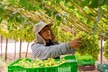
While Sun World was founded in California, global expansion became essential as the industry moved toward year-round supply and higher expectations for consistency. That journey wasn't about scale for its own sake, it was about learning, consistent availability, and consumer experience. Working across regions generated an understanding of how genetics behave in different climates, production systems, and harvest windows. That knowledge determines how breeding is done today. "You can't design for consistency unless you've tested genetics across real-world conditions globally."
That global perspective is now foundational to how portfolios are being built across grapes, mangoes, cherries, and citrus. True consistency—especially at commercial scale—only comes when genetics are proven across markets, not just optimized for one region.
 © Sun World LLC
Development of brands in grape category
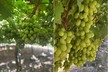
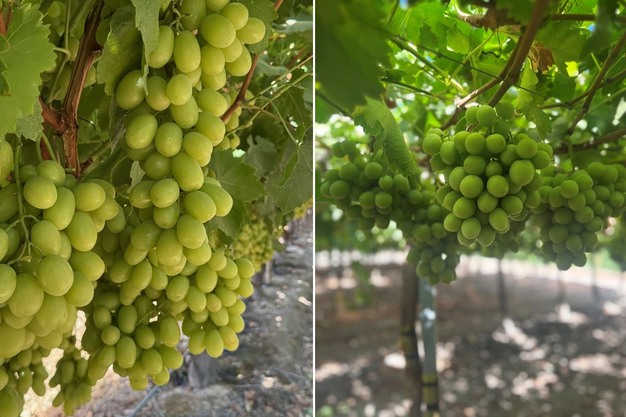
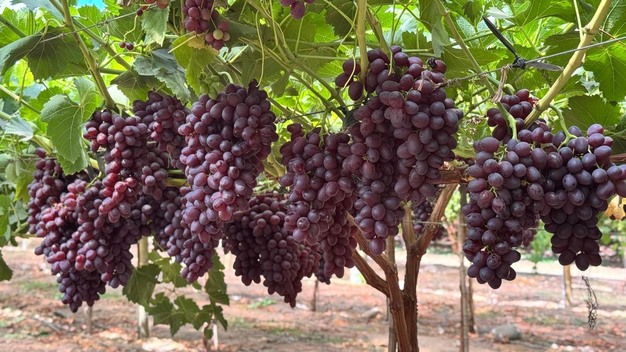
Sun World has introduced many proprietary fruit varieties over the years, starting out with grapes. For this category, strong brands have been developed over the years. Branding in grapes gained traction when the category moved from being sold as a seasonal commodity to being delivered as a year-round eating experience. As global supply expanded, both retailers and consumers needed clearer signals—ways to know what a grape would taste and feel like before buying it.
That's where branded grapes emerged. Brands like Autumncrisp®, Ruby Rush®, Adora Seedless®, and Midnight Beauty® were created to communicate a specific eating experience—flavor, texture, and reliability—rather than a variety name that meant little to most shoppers.
These brands helped reframe how grapes show up in the store. They demonstrated that produce can be just as craveable and loyalty driven as packaged snacks, encouraging repeat purchase by delivering a dependable experience. That shift didn't just benefit individual brands, it helped lift the snacking category by positioning grapes as a reliable, crave-worthy choice.
"For us, branding has never been about marketing alone," Calvo said. A brand only works if the fruit performs consistently across regions, seasons, and supply chains. In that sense, branding became a form of accountability, raising standards across breeding, growing, and commercialization while making it easier for shoppers to choose fruit they'll enjoy every time.
Branding in mango and citrus needs to be earned
In 2024, Sun World expanded into the breeding of mango and citrus. In these categories, the company is focused on building portfolios, not chasing one-off wins. However, each category is on a different timeline.
In mango, the opportunity is to improve the category by reducing variability and delivering a more consistent eating experience across the season. That means building an early-to-late portfolio, learning through global evaluation, and commercializing in a disciplined way. A mix of owned and third-party genetics are used to move faster and fill gaps, with the best product winning based on performance. Blyde Late is an example of a mango variety that fills a rare late-season window, allowing growers and Sun World to establish presence now and improve that slot over time. "Branding is part of the long-term plan, but it has to be earned—limited branded volumes in five years would already be meaningful." Harvesting during a low-availability window creates greater value across the supply chain, driving stronger pricing for growers, supporting retailer demand, and extending fresh mango availability for consumers.
Citrus is further along. Seedless lemons represent a real category shift, with strong consumer demand already in place. The main challenge is consistent year-round supply, but as those improve, seedless lemons are likely to become the norm. In easy-peel mandarins, convenience and consistency are key, and varieties like Leanri play an important role by strengthening mid-season quality and helping maintain brand continuity. More broadly, there's an opportunity to more clearly showcase the strength and depth of the citrus portfolio, supported by data.
 © Sun World LLC
Fruit Logistica Berlin
Curious to learn more about Sun World's grape brands and the company's efforts in mango and citrus breeding? Meet the team in person at Fruit Logistica Berlin this week: Hall 25, stand B-21.
In the next few weeks, an article will be published on what lies ahead in innovation in fruit breeding.
 For more information:
Jennifer Sanchez
Sun World
Tel: +1 (831) 601-0826
[email protected]
www.sun-world.com