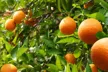
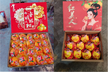
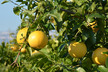
Citrus fruit produced entirely using renewable energy has entered the market for the first time in South Korea, following the launch of what Jeju Island describes as "RE100 citrus." The initiative extends the island's clean energy strategy into fruit cultivation.
The provincial government formally introduced the production model at the Jeju Agricultural Research and Extension Services. According to officials, this marks the country's first full application of the RE100 framework to fruit farming.
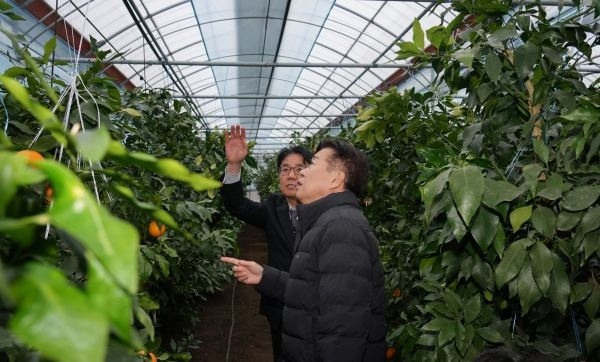
Under the RE100 citrus system, all energy used during cultivation is generated on-site from renewable sources. Heating and electricity are supplied through solar power installations, air-source heat pumps, and energy storage systems. The operation does not rely on electricity from fossil fuel–based external grids.
 © eju Special Self-Governing Province
The initiative builds on a pilot project that started in January 2025 at a greenhouse in Seogwipo. At that site, Jeju installed a combination of panel-type and film-type solar systems, along with energy storage units repurposed from used batteries. Technical verification and certification have since confirmed that the cultivation process operates entirely on renewable energy.
Jeju authorities stated that this represents the first nationwide case of integrating renewable energy across the full crop production process. Prior to this, the province had implemented RE100 models in livestock production, including egg and milk production powered solely by renewable sources.
From this month, Jeju plans to extend the citrus model to two commercial citrus farms that already have solar installations. The government also intends to develop standard greenhouse designs incorporating film-type solar panels with a focus on disaster resistance. These designs are expected to be followed by the creation of production manuals and expanded field testing through 2027.
In parallel, the province plans to promote RE100 certification, labelling, and branding as part of its approach to positioning environmentally oriented agricultural products from Jeju in the market.
"RE100 citrus shows that Jeju's energy transition has taken root in everyday farming," Governor Oh Young-hoon said at the launch.
"If farmers can grow fruit with rooftop solar while also selling electricity, renewable energy becomes not just a cost-saving tool but a new source of income. The essence of Jeju-style RE100 agriculture is turning residents from energy consumers into energy producers."
The citrus project aligns with Jeju's longer-term objective of achieving carbon neutrality and integrating renewable energy into rural production systems.
Source: The Korea Bizwire