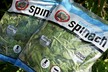
Around half of the broccoli grown in Sweden is currently left in the field at harvest. A project involving Axfoundation, Grönsakshallen Sorunda, and several partners across the value chain has developed a method to utilize broccoli leaves that are normally discarded. One outcome is the introduction of a broccoli leaf soup in IKEA Sweden stores from January.
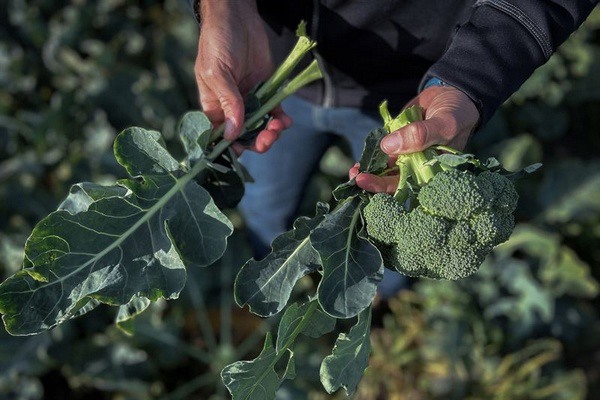
In Sweden, broccoli production generally focuses on the florets, which represent about 20 percent of the plant. The stems and leaves are usually not harvested, even though around half of the leaves are suitable for consumption. This means a large share of the crop does not enter the food chain. According to calculations from the Whole Plant Initiative, harvesting the upper broccoli leaves could, in practice, double usable yields without increasing cultivated area.
 © Axfoundation
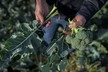
The initiative builds on research conducted by the Swedish University of Agricultural Sciences. Growers, processors, wholesalers, and food companies have tested how broccoli leaves can be handled under commercial conditions. Trials were carried out at Axfoundation's development facility at Torsåker Farm, followed by further refinement together with Grönsakshallen Sorunda. The process involves harvesting the leaves, chopping them, packaging them, and applying mild heat treatment to stabilise colour, texture, and flavour.
The broccoli leaf soup being introduced in Sweden illustrates how material previously left in the field can be converted into a food product without additional land, water, or agricultural inputs. Availability is limited, and partners involved aim to increase the volume of leaves used during the 2026 harvest season.
Data from Swedish institutions highlight the scale of the unused resource. Broccoli plants consist of roughly 20 percent florets, 30 percent stem, and 50 percent leaves, with about half of the leaves being edible. Sweden harvests around 2,800 tonnes of broccoli annually. Estimates suggest that close to 70 percent of edible broccoli biomass is lost, including unharvested leaves and losses later in the supply chain. Using more of the plant could reduce the climate impact per kilogram of food produced. Broccoli leaves contain fibre and vitamins C and K, and can, in some cases, be more nutrient-dense than the florets.
Vegetable consumption in Sweden remains below national dietary recommendations, with around one in ten children and adolescents and two in ten adults meeting guidelines.
The broccoli leaf work forms part of a broader research effort on utilising agricultural side streams, funded through the European Agricultural Fund for Rural Development. Within the Whole Plant Initiative, pilot activities have also resulted in other products, including a vegetarian patty developed using broccoli leaves.
 © AxfoundationFor more information:
Linda Andersson
Axfoundation
Tel: +46 (0) 73087 15 70
Email: [email protected]
www.news.cision.com