Operating through a network of more than 500 smallholder farmers, Afri Foods is a young Rwandan agrifood exporter positioned at the intersection of gender inclusion and technology-enabled scaling. The company was founded in 2019 by Sakina Usengimana and currently focuses on avocados and chilies.
However, Usengimana did not begin her career in agriculture. "I worked in the corporate sector and was previously active in the fashion industry," she says. "My interest in agriculture developed gradually, catalyzed by youth entrepreneurship forums that emphasized Africa's opportunities in land and climate resources."
 © FreshPlaza
Sakina Usengimana, managing director of Afri Foods Ltd.
Usengimana's first foray into agriculture involved growing tomatoes and bell peppers for local markets. But price fluctuations and market unpredictability quickly revealed the sector's limitations. "One day I'd sell a sack for $50, and the next, the same sack would fetch $20," she recalls. That volatility led her to explore export as a more stable path. Her visit to Fruit Logistica in 2020 cemented this shift: "Export came as a solution to the challenges I was facing."
She launched Afri Foods that same year, focused on exporting high-value crops. Today, its primary products are Hass avocados, fresh chilies, and passion fruit. Other crops, French beans, okra, eggplants, long beans, mangoes (Tommy Atkins and Kent), and jackfruit, are offered based on customer demand.
Demand first, then production
Afri Foods takes a deliberate, demand-driven approach. "We don't just ship what's available locally," Usengimana explains. "We invest first in quality and traceability. If a client wants okra, for example, we create a production plan, not just buy from the market."
This approach has attracted a range of buyers, primarily in Europe and the Middle East. The UK currently accounts for 40% of exports, followed by the UAE (30%) and the EU (30%), mainly Germany, Belgium, the Netherlands, and France. There's interest from Ghana, and Afri Foods aims to leverage the African Continental Free Trade Area to expand regional trade. "We also supply Kenya when they are off-season," Usengimana notes.
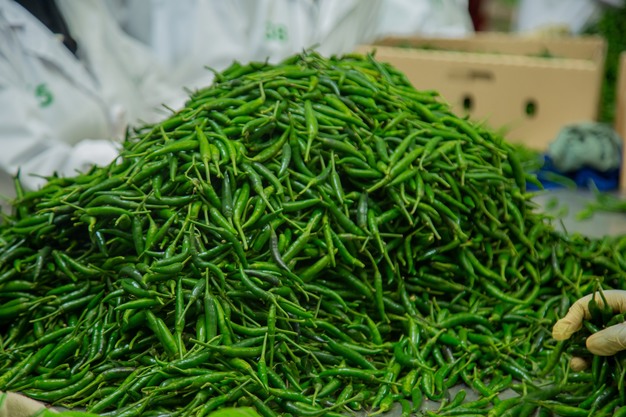 © Afri Foods Ltd.
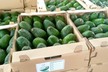
Today, Afri Foods' primary products are Hass avocados, fresh chilies, and passion fruit.
A farmer-centric model
Afri Foods currently partners directly with over 500 smallholder farmers, most cultivating under one hectare. Within two to three years, that number is projected to rise to more than 5,000. The company primarily works through cooperatives, with some reaching up to 4,000 households. "Individual farmers are hard to support efficiently," says Usengimana. "So when we go to a new area, we encourage them to organize into groups."
Support includes agronomists embedded in cooperatives, model farms for demonstration, and partnerships for training, especially with the National Agricultural Export Development Board (NAEB). Farmers receive help with input scheduling, irrigation planning, cost tracking, and crop rotation strategies to maintain soil health and stable income.
Importantly, the company uses a contract farming model to stabilize incomes and mitigate risks. Diversification is also encouraged: "While waiting for avocado trees to mature, farmers can earn from chili or passion fruit."
Gender inclusion in practice
Afri Foods is a women-led company with gender inclusion woven into its structure. Women are especially present in sorting, grading, and packhouse operations. "Sometimes, it's even hard to find men for these roles; they consider it women's work," Usengimana says. Beyond operations, the company promotes women's leadership in cooperatives and has achieved "gender seal" certification in the silver category, recognizing its practices. "When we visit cooperatives, we ask: where are the women? How are they participating?"
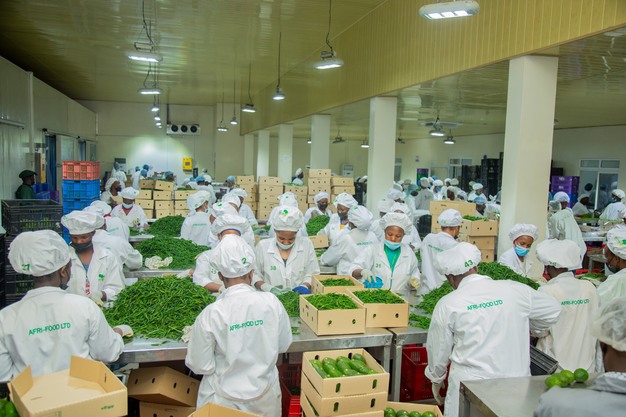 © Afri Foods Ltd.
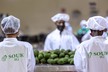
Women are especially present in sorting, grading, and packhouse operations.
Digital agriculture: from fields to forecasts
Afri Foods is steadily becoming a data-driven company. It's developing systems to track planting dates, chemical applications, residue risks, productivity, rejection rates, and field conditions. "We can't grow without technology. It's not optional," Usengimana says. Upcoming digital tools will enable better yield forecasting, traceability, and supply planning. Mechanization is also on the agenda, particularly grading and sorting machines, to reduce inefficiencies. "Labor is cheap, but efficiency is low. We need to change that," she notes.
The infrastructure challenge
Afri Foods currently uses certified external packhouses (HACCP certified), but plans to build its own facility closer to production zones. "The packhouse won't be in Kigali," Usengimana says. "It has to be near the farmers, where the produce is coming from." This will reduce transport costs, improve handling for sea freight, and facilitate quality segregation using in-house machinery.
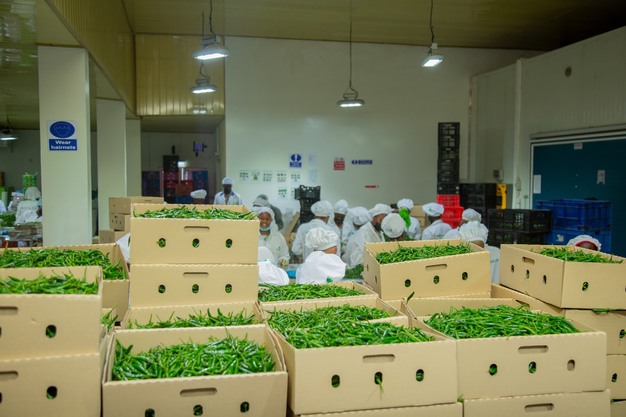 © Afri Foods Ltd.
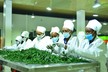
Afri Foods currently uses certified external packhouses (HACCP certified), but plans to build its own facility closer to production zones.
Rwanda's new national laboratory, Sequi, is also a game changer. "Before, we had to send MRL samples to Kenya, which is expensive and time-consuming. Now we can test locally, which supports smallholder compliance with export requirements."
Adding value to hedge risk
Value addition is next on the horizon. Usengimana plans to start avocado crude oil production, viewing it as a way to hedge against geopolitical disruptions, increase margins, and create local jobs. She's also exploring ginger and greenhouse-grown berries, including blueberries. "We've built one greenhouse already. Hydroponics is on the radar, but that requires major investment."
The finance hurdle
Access to finance remains one of Afri Foods' biggest challenges. "Banks want traditional collateral, like houses, but what about avocado trees that produce for 50 years?" Usengimana argues. While Rwanda has made progress by introducing various agri-financing and women's financing programs, such as "Shabuka", interest rates are still high. "12% is still steep for agriculture."
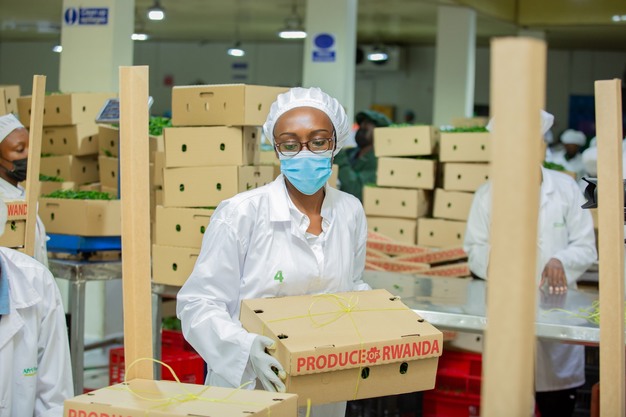 © Afri Foods Ltd.
She advocates for better agricultural risk assessment in financial institutions and welcomes partnerships with impact investors and clients willing to co-invest in farmer capacity. "I'm looking for clients who help us reach where they want us to be."
Scaling up, thoughtfully
Looking ahead, Usengimana envisions Afri Foods growing into a pan-African sourcing company. "The name wasn't chosen randomly," she says. "We want to source from Rwanda, but also from countries like Tanzania, where crops like cloves grow well." She also plans to expand from hundreds to thousands of farmers, vertically integrating into processing and packaging, and possibly listing on a stock exchange. "But execution comes first. Finance will follow."
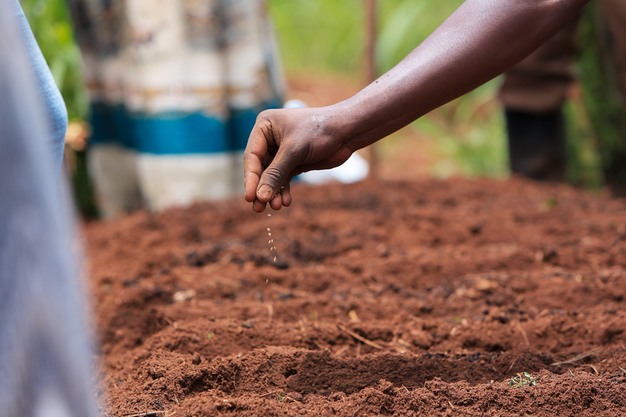
Rather than pushing farmers to expand land, Afri Foods focuses on increasing yield and income through education, efficient practices, and technology. "Nevertheless, one of our farmers bought land with the income she made. That's the kind of impact I want."
 © Afri Foods Ltd
Keeping it real
For now, Usengimana is content building step by step. Organic production is a future goal, but not yet feasible. "Organic needs dedicated packhouses and investment. Even neighboring farmers affect certification. We'll get there, but not today." Instead, she stays grounded: "We want to stabilize our core crops, avocado, chili, and passion fruit, before expanding into okra, ginger, or blueberries."
In the end, it all comes down to building systems that deliver. "Whether it's training, data, or packhouses, everything must help us deliver on our promise. We want to be reliable, efficient, and consistent. That's the only way forward."
 For more information:
Sakina Usengimana (managing director)
Afri Foods Ltd
KK 621 St, Kigali (Rwanda)
Tel.: +250 786 416 032
[email protected]
https://afrifoodsltd.com/
For more information on the Rwandan fresh produce export sector, please contact Charlotte Uwicyeza ([email protected]) of the National Agricultural Export Development Board (NAEB), which will also be present at the upcoming Fruit Logistica: Hall 26, Stand C-61. A joint booth with Rwandan companies can be found at Stand B-80 in Hall 26. Click here for an overview of Rwandan fresh produce exporters.