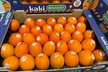
In contrast to last year, this year's Spanish citrus season started according to plan. "We have been spared severe weather this year, so the first deliveries of our proven premium brand Diana arrived two weeks earlier than last year. At the transition between seasons, there was a shortage of large sizes of both oranges and clementines, which was primarily due to water shortages at the source. Smaller sizes, on the other hand, are available in sufficient quantities and of good quality," explains Clemens Götzinger, co-managing director of Lindner Fruchtimport GmbH, based in the Frischezentrum Frankfurt.
According to market forecasts, the supply of large sizes will gradually catch up over the course of the season. Nevertheless, demand for large citrus fruits is usually particularly strong at the beginning of the season, while it tends to decline later in the season, Götzinger explains.
 © Lindner Fruchtimport GmbH
Price sensitivity threatens branded fruit
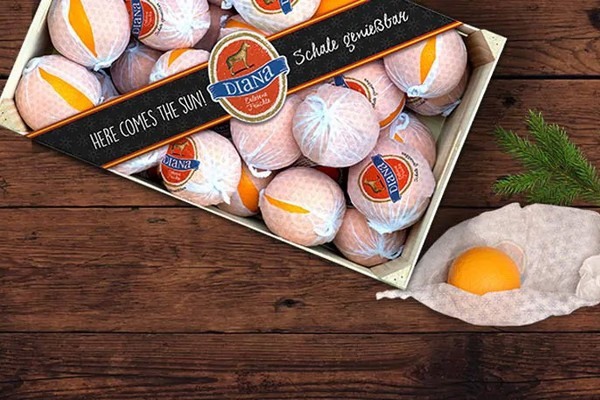
The proven citrus brand Diana is considered Lindner's seasonal flagship during the cold season. With the takeover of Soravia around 18 years ago, the company also acquired the exclusive distribution rights for the brand in the Rhine-Main area. Even in today's highly competitive market environment, the high-quality fruit continues to be well received. Götzinger: "There is still a loyal group of buyers who are brand-oriented and explicitly ask for the brand. The fact that DIANA brand citrus fruits are only washed and treated with natural wax after harvesting, making the peel suitable for consumption, is an important criterion for many buyers."
"However, these customers are also becoming more price-sensitive, while costs – whether wages or logistics – are rising at the same time, meaning that the product is not becoming any cheaper. During the pandemic, Diana, as a high-quality product that is already well established at weekly markets and in specialist retail outlets, attracted a lot of attention. During this period, consumers were more inclined to treat themselves to something good. However, if branded products end up being too expensive, sales will slump. This is particularly true given the extremely low prices in some cases – even if the quality is not always comparable," explains Götzinger.
Extreme weather conditions affect citrus cultivation
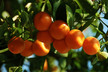
In addition to established oranges such as Navelina and the like, unusual varieties such as Cara Cara oranges and Choco oranges are also increasingly being chosen as alternatives, Götzinger continues. Meanwhile, climate change is increasingly posing major challenges for Spanish citrus producers. "Often, the contrast between warm daytime temperatures and significantly cooler nights required for citrus cultivation is missing until the beginning of November. This means that we have nights that are much too warm until late October, coupled with the aforementioned water shortage and the lack of large calibers in general. There seem to be only two scenarios left: either there is too little water, like this year, or heavy rainfall, like last year. Normal conditions without extreme weather are becoming increasingly rare."
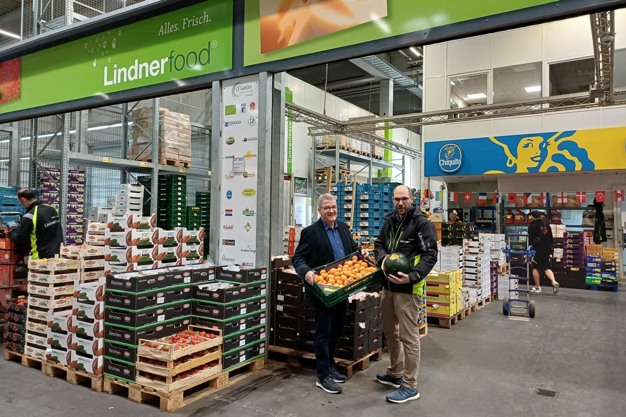
Clemens Götzinger and Stefan Lindner during FreshPlaza.de's wholesale market visit in 2024
Gloomy mood in wholesale
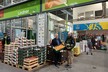
The local Frischezentrum Frankfurt is and remains the hub of Lindner's business activities. Here, the company operates both a traditional stall business and a delivery service for communal catering, restaurants, and hotels. "The general mood at the wholesale market is very subdued to poor. Wholesale market customers are struggling greatly with the food retail chains, especially with prices, and as a result can no longer achieve the margins they used to at the weekly markets. This is exacerbated by significantly higher costs, such as the minimum wage. In the long term, food retail chains are adding more and more niche products to their ranges. This means that end consumers can also find unusual items such as physalis, passion fruit, and papaya there, which in turn leads to a decline in visits to weekly markets and specialist retailers."
According to Lindner GmbH, the Christmas campaign has been rather subdued so far. Strong sales are expected in the run-up to the Sunday before Christmas. "Looking back, the local fresh produce center recorded some massive declines in sales, especially in the second half of the year. This is in line with the nationwide trend, as colleagues at other wholesale markets report a similar situation," he concludes.
For more information:
Clemens Götzinger
Lindner GmbH
Fruchtimport und Handelsgesellschaft
Josef-Eicher-Str. 10
60437 Frankfurt
Telephone: 069-401008-0
Fax: 069-401008-25
[email protected]
www.lindnerfood.de