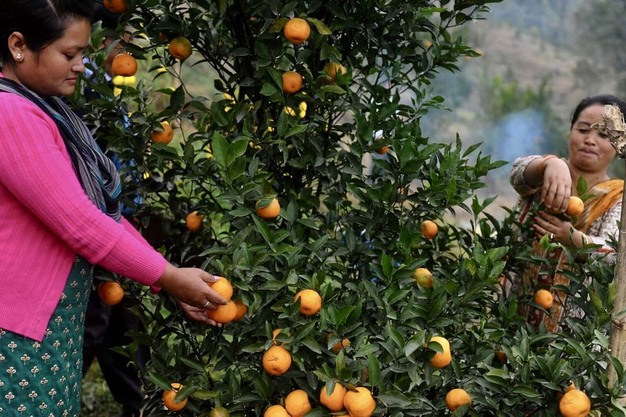
Tripura's orange orchards are delivering good volumes right now, with the harvest window lasting until February-March, says Sukanta Paul of Sukanta Overseas, a fresh produce exporter in the region. "Production has been stable thanks to favourable weather and better orchard management by local farmers. The cultivation spans across 8,000 to 9,000 hectares, mainly by smallholder growers, which is keeping supply steady for both domestic and cross-border shipments."
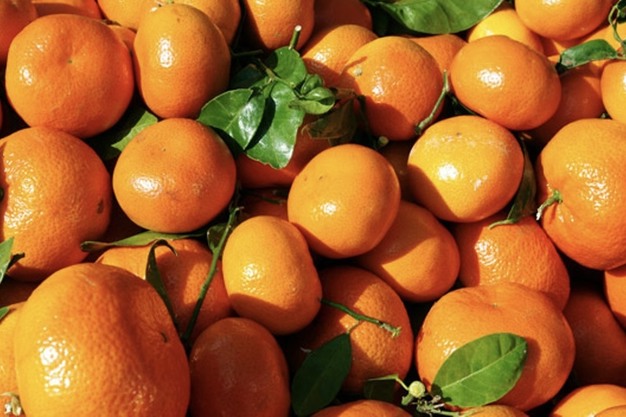
Paul shares that Assam oranges, locally called Khasi, dominate cultivation and exports in Tripura. "This indigenous variety is packed with balanced sweetness, juicy flesh and a natural aroma that buyers recognize very well. Exports stick to this traditional variety for now, skipping hybrid seedless types. While Nashik is known for its larger-scale exports, sizing uniformity and well-established export infrastructure, Tripura oranges stand out for their natural sweetness, aroma and juiciness."
 © Sukanta Overseas
According to Paul, this season's quality shows improvements over last year, with better fruit size uniformity, colour development, juice content and lower disease incidence across growing areas. "Farm-gate prices range from USD 0.20 to 0.28 per kg depending on size, quality and location, with export-grade fruit fetching the higher end. Prices are moderately higher compared to last year due to improved quality and steady demand. While export volumes stay similar, better grading and sorting have stabilized values for growers," he notes.
Bangladesh represents the top export destination for Tripura oranges, given its proximity and strong demand for fresh Indian citrus. "Exploratory trial shipments are also being sent to Nepal and Bhutan, where logistics work well for smaller volumes. Demand is driven by diaspora consumption and preference for naturally ripened fruit," Paul says, pointing to Middle Eastern markets like UAE and Oman showing potential for future growth.
 © Sukanta Overseas
Logistical connectivity in Northeast India is a key challenge for now, Paul highlights. "Exporters like us stay concerned about long transit times. We use ventilated corrugated cartons, size-based grading, protective inner liners and carefully stack the fruit to minimize damages. This helps to improve shelf life and presentation compared to traditional loose packing, while close coordination with cold-chain providers speeds up transport planning."
Looking ahead, trials of longer-shelf-life varieties and export-tuned farming practices are progressing alongside tie-ups between farmers and exporters. As Paul puts it, "Tripura has the potential to become a go-to source for quality oranges, especially as infrastructure support gets better. With the right strategy, farming practices and investments, the region's citrus programme is expected to go national and beyond."
For more information:
Sukanta Paul
Sukanta Overseas
Tel: +91 98 56 426 964
Email: [email protected]