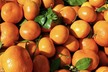
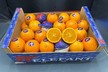
The clementine campaign continues in the Spanish province of Castellon with the end of the harvesting and marketing of the Clemenules variety. The rains of the last few days have brought the harvest to a halt in one of the periods with the highest demand, and following a challenging first part of the campaign. Soon, the first Sando clementines will be arriving in a market that already has its sights set on the second part of the season.
 © Joel Pitarch | FreshPlaza.com
"The first part of the season has been difficult, given the high prices paid at the source due to the generalized fear in the sector of not having enough volumes after hail storms hit important production areas this summer. At the same time, the fruit supply from the Southern Hemisphere has continued for longer than expected, competing with better varieties at lower prices," says Juanjo Minguet, Manager of Frutas Minguet, a company from the municipality of Xilxes specializing in clementines and mandarins with leaves, as well as melon and watermelon in the summer months.
"Leaving aside the high level of speculation at the source this year, I believe that this extension of the Southern Hemisphere season in Europe which is causing some overlap with the beginning of our campaign, is not a temporary phenomenon, but a trend that will continue to consolidate," says Juanjo Minguet. "Varieties such as the Orri, the best one in my opinion, both agronomically and in terms of flavor, with very limited losses on the shelves compared to the early varieties we have here, and with competitive prices, are definitely more attractive for large-scale European retailers."
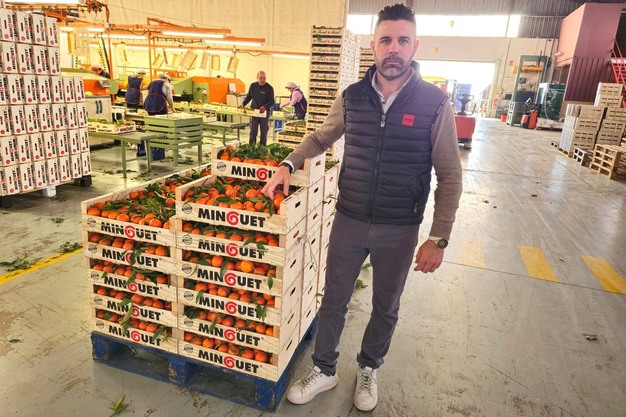
But has there really been as much of a Clemenules shortage as people thought? "Hail caused the Clemenules production to fall, but not as much as the sector initially estimated. It's true that the most affected areas are the ones producing the most Clemenules, but we are talking about a variety with a very large production throughout Spain," says Minguet.
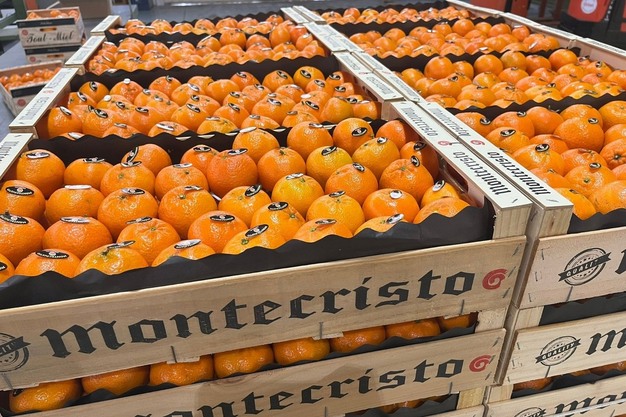
"And the fact is that, over the years, the marketing period of the Clemenules has been increasingly shortened. If the production drops, but there's also less time to sell it, there will still be enough supply and there might even be a surplus. Because of climate change, the crop has been affected by an increasing number of pests. Summers are getting longer and, when cold weather arrives, the fruit's ripening is at a more advanced stage, which potentially leads to more quality problems in storage and at destination. Because of this, the Clemenules is suffering more and more problems and the markets are eager to move on to the next varieties, such as the Sando or Clemenvilla, as soon as they are available."
 © Joel Pitarch | FreshPlaza.com
According to Minguet, there's still a long way to go when it comes to the breeding of varieties for the first part of the season. "We need varieties adapted to the new climatic conditions, which last longer on the tree and give us the flexibility to market them at the best moment, without having to take hasty decisions when there's a threat of rain, for example."
"We could soon have varieties overlapping a bit more with the Clemenules, like the Mina; a variety that stands out for its color and which is harvested from mid-November to mid-January, depending on the area, and is highly suitable to be packed with leaves. In any case, even if it's shortened, the Clemenules will still have its own marketing window."
 © Sando Clementine
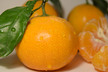
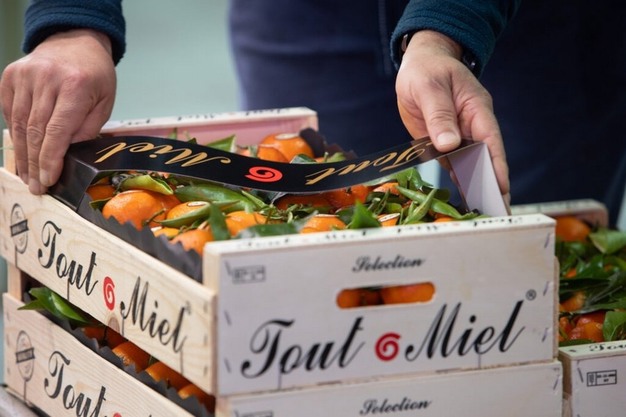
Frutas Minguet handles most of the clementines and mandarins with leaves intended for the premium market, both in Spain and in France, Germany and the United Kingdom. "We are targeting a specific type of consumer who is loyal to this kind of leafy product, which is renowned for its greater freshness because it is harvested at a more optimum point of ripeness and hits the shelves in just 24-48 hours. Despite signs of weakening consumption in general, these products are not as affected due to the purchasing power of their consumers."
Frutas Minguet's season therefore runs from October 15 to the end of April. "It is a challenge to offer clementines with leaves for so many months, because not all varieties are suitable for this. That's the case of the Clemenvilla or Orri, the only variety we produce without leaves. There are very high risks in the field and we try to have our own production, so that we are the ones taking that risk, and not the growers."
 For more information:
Frutas Minguet
Valencia Street, 40
12592 - Xilxes, Castellon. Spain
Tel.: +34 964 58 30 72
[email protected]
www.frutasminguet.com