The state of Piauí in Brazil is seeking to expand domestic fruit and vegetable production to reduce reliance on imports and improve year-round supply. According to Governor Rafael Fonteles, the objective is to strengthen local output in terms of volume, diversity, and consistency by investing in production systems, irrigation, farmer organisation, and water infrastructure.
The strategy is coordinated mainly through the Secretariat of Family Agriculture and the State Secretariat of Irrigation and Water Infrastructure. Family farming forms the base of the expansion plan, supported through two large rural development programs: Pillars of Growth and Social Inclusion Phase II and Sustainable and Inclusive Piauí. Together, these programs represent more than US$210 million in planned investments focused on modernising production systems and improving farm structure.
 © Government of Piauí
Pillars II is financed by the International Bank for Reconstruction and Development and has a budget of US$62.5 million. The program supports land tenure security, climate-smart production practices, natural resource management, environmental regularisation, technical assistance, and producer organisations. Activities are concentrated in six territories identified as having higher agricultural potential, including the Coastal Plain, Cocais, Entre Ríos, and Chapada das Mangabeiras.
The Sustainable and Inclusive Piauí program focuses on semi-arid areas and mobilises US$147.5 million from the Inter-American Development Bank, the International Fund for Agricultural Development, and state funding. The program operates in 138 municipalities and targets water security, environmental management, and farm-level production support. Investments include water sources, small dams, catchment systems, and local supply infrastructure to maintain production during dry periods.
Producer organisation and technology adoption are also part of the approach. Secretary of Family Agriculture Rejane Tavares said, "SAF has been strengthening cooperatives and associations so that they can take on stages of logistics, marketing, and, in some cases, processing." She added that access to irrigation, technical assistance, solar energy systems, and adapted machinery is intended to reduce costs and improve production planning. Marketing channels include institutional purchasing programs such as the Food Acquisition Program and direct sales to private buyers.
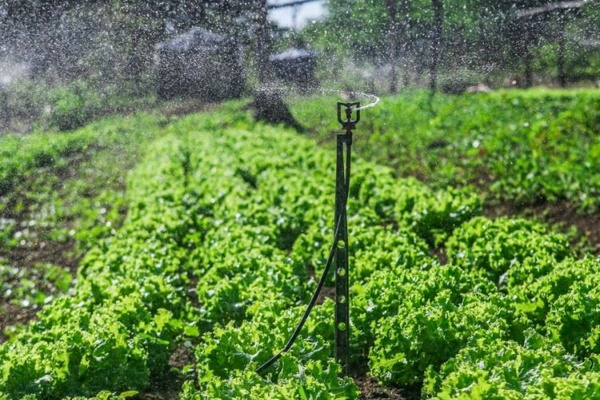
Irrigation plays a central role in ensuring the continuity of supply. The state has distributed 1,219 drip irrigation kits across 48 municipalities, with investment reported at R$7.8 million. Each system covers 0.5 hectares and applies water directly to the root zone, allowing production during drought periods while limiting evaporation losses.
Source: Campo Maior in Focus / Abrafrutas