The harvest of the protected Sando clementine variety will start in a few weeks' time, with prospects of harvesting between 25 and 27 million kilos. Volumes have been on an upward trend in recent years due to new plantations coming into production, although this season's volume will be similar to the previous one or slightly lower due to the impact of hailstorms in the main growing areas.
Joan Antoni Caballol, General Manager of Sando Clementine, says that despite the damage caused by hail in July, mainly in Castellon and the north of Valencia, a good Sando season is still expected this year. "Some have lost between 30 and 40% of their productions, while other plots have suffered no more than 10% damage. Some actually lost part of their recently planted seedlings," he says.
 © Sando Clementine
Despite this, Joan Antoni says that "Sando is resistant to the Alternaria disease, which has been taking a significant toll on hybrid mandarin varieties. It's also worth noting that a share of the plants has been purchased by growers who already had the variety and wanted to renew their plantations, which will help them not only to increase their productivity in the medium and long term, but also to obtain a better quality."
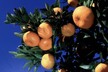
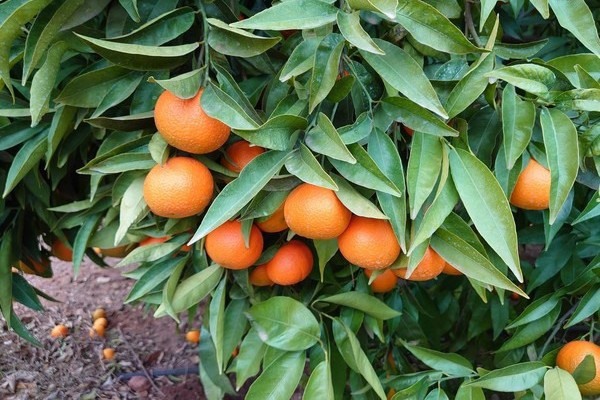
With a harvesting season lasting from January to March, Sando is a spontaneous mutation of the Fina clementine from the Plana Baixa region in Castellon. The fruit has an oval shape, a deep reddish orange color, and an average size of between 55 and 65 mm.
The tree is vigorous and thornless, and the fruit grows mostly in the interior, which keeps it protected from inclement weather and makes it easier to obtain a greater quantity of higher-quality fruit. Moreover, it is highly-suited to be harvested with leaves, which is really appreciated by some markets as a sign of freshness.
There are already 724 hectares planted with Sando. The acreage devoted to both conventional and organic crops has again grown this year, and prospects point to continued expansion in the coming years. "In the short term, we are planning to open an office in Betxí, Castellón, one of the most important clementine growing areas. From that location, we'll be able to plan meetings with growers and continue working closely with them," says Joan Antoni.
"Internationally, the variety is starting to grow moderately in the south of Italy, where it arrives around 15 days later than in Spain, thereby extending its production schedule in the Northern Hemisphere," says Joan Antoni. "Meanwhile, planting is already starting in South Africa, and the production of mother plants continues in Australia, where we will be competing with the Imperial variety, which has issues with Alternaria. Also, the quarantine periods will soon finish in California, and we'll begin with the quarantine in Peru." © Sando ClementineFor more information:
Joan Antoni Caballol i Angelats
Sando Clementine, S.L.
Av. Generalitat, 104, 1.º C
43500 Tortosa, Spain
Tel. +34 609045598
[email protected]
www.sandoclementine.com