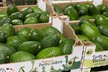
Marand officially launched in 2017, starting with air-freighted mango exports and a modest line of dried products like quinoa and chia. But it wasn't long before avocados stole the spotlight. The real turning point came in 2018, when several clients asked if the company could develop a Hass avocado program. That request completely reshaped Marand's business model. Today, avocados make up 95% of its exports.
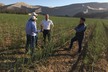
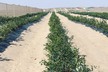
Despite being a young company, Marand has built a strong supply network of small- and medium-scale growers along Peru's coast and highlands. Many of these farmers operate on small plots, and Marand works closely with them through a formal supply chain and year-round technical support. "Our model is based on ongoing collaboration throughout the year", the company explains. That includes technical visits, training, and field supervision. Currently, a large part of Marand's technical team is stationed in the Andes, strengthening farming practices and preparing for the early harvest in January and February.
 © Marand Company SAC
Smart harvest planning to avoid oversupply
Thanks to Peru's diverse geography, Marand can export avocados for nearly nine months of the year. The season kicks off in January and February with fruit from the highlands, generally medium to small in size. By March and April, production shifts to the coastal regions, which tend to align better with European demand. When global supply peaks in May and June, Marand strategically scales back exports to avoid market saturation.
Europe and Asia: different markets, different demands
About 70% of Marand's avocados head to Europe, with Spain and the Netherlands as key destinations. In Málaga, importers prefer larger fruit (sizes 12–18), though demand drops when supply floods the market. The remaining 30% goes to Asia, mainly China, Japan, and South Korea, where smaller sizes (20–32) are in higher demand.
Logistics: precision is everything
Shipping avocados is a logistical challenge that requires pinpoint accuracy. It takes 19 to 23 days for the fruit to reach Europe and about 24 days to get to Shanghai. That makes quality control at the source absolutely essential; any issues during production become apparent by the time the fruit arrives. The rising standards in markets like Europe mean Marand must continually invest in lab testing, pesticide residue monitoring, and strict compliance with pre-harvest intervals. Certifications are also becoming increasingly important, prompting the company to implement a rigorous compliance system both internally and among its growers.
"It's painstaking work", Marand admits. Many small farmers operate informally, making it difficult to track practices, meet documentation requirements, or comply with pesticide protocols. But without this level of control, entering supermarket programs in Europe, where pricing tends to be more stable, is nearly impossible. In addition to the more common certifications, Marand also runs an organic program in Chimbote, certified under USDA Organic and the EU's bio label.
Building long-term trust
Working with smallholders comes with its own set of risks. Marand knows from experience that a higher offer, just a few cents more per kilo, can tempt growers away. "It happened to us early on", they say, "but many producers came back when they realized that technical support and certification ultimately led to better prices."
In the most recent season, Marand exported 405 containers of avocados. Their goals for next year are ambitious, though the company remains grounded: "In the end, it's the market that decides. Europe's own production is growing, especially in Spain and Morocco, and Asia still depends on a cultural shift in avocado consumption, which is progressing, but slowly."

For more information:
Marand
www.marand.com.pe