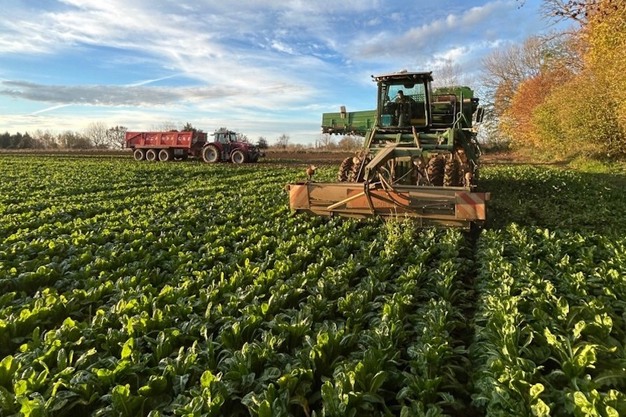
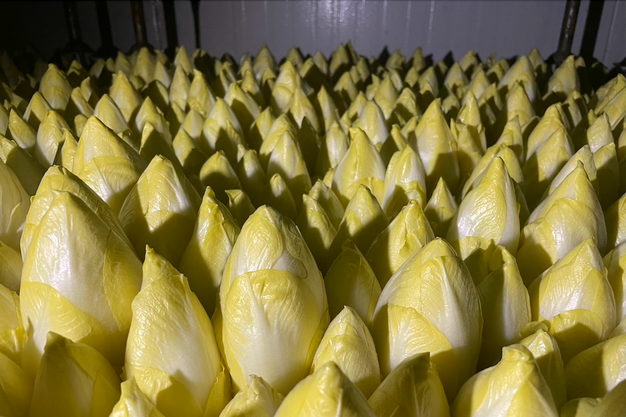
At SARL Endigra in Beugny, Pas-de-Calais, endives are a family affair. Since January 1st, 2022, Colette Duchateau has joined her parents and brother to continue the endive business started by her maternal grandparents. The farm has opted to manage the cultivation of semi-forced vegetables. The family grows endive roots on 100 hectares of land, forcing, packaging, and then selling the endives via the En'Diva producers' group.
 © Ferme Hemeryck-Duchateau
A fine season ahead
On the farm, the current season is taking place in particularly favorable conditions. The harvest (which is deliberately later than usual) started on October 31st and is scheduled to run until mid-December. Colette Duchateau is very positive about the season ahead. "This is a very important period for the sector (known as the changeover period, when the old and new harvests come together), for both growers and clients, because it is when we can assess the harvest and its potential. This year, we are lucky to have good weather and agronomic conditions. The roots are beautiful, and we feel that we have very good production potential. If the conditions remain this favorable, we really do have a great production campaign ahead of us. We can therefore reasonably say to our clients that we will be able to supply them with endives until next spring without any worries." This is an encouraging sign for professionals in the downstream sector, who will be able to promote French endives over a long period.
 © Ferme Hemeryck-Duchateau
A cold snap should boost consumption
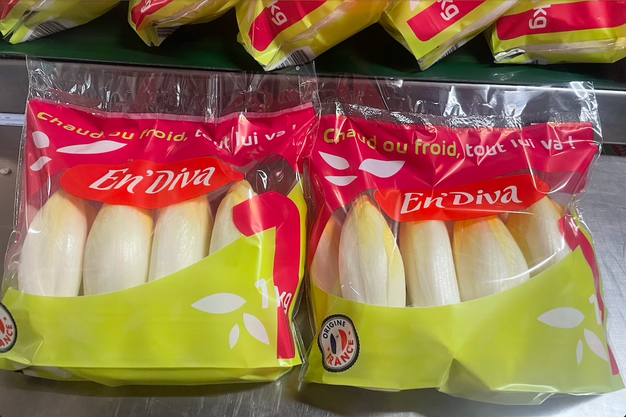
As far as consumption is concerned, the arrival of real cold weather is being welcomed with satisfaction. "We had a mild autumn, ideal for harvesting but less favorable for consumption. So the onset of cold weather is very welcome. It triggers purchases, motivated by the prospect of cooking hot dishes. When an autumn is too mild, consumers tend to purchase products other than endives," explains the grower, who is nevertheless keen to point out that "the balance between supply and demand remains fragile, and if we have good root harvests, it is important that consumption follows. The aim is to ensure that prices are remunerative for growers and that the packaging and prices offered in the stores are adapted to consumers. The role of trade and distribution is therefore essential."
 © Ferme Hemeryck-Duchateau
A positive year ahead, but the sector is fragile
While the immediate outlook is positive, the endive sector is still facing three major structural challenges: Agronomic, economic, and human. On the technical front, the endive sector is being hit hard by the successive withdrawal of active ingredients and an increasingly demanding regulatory framework. "Research time does not correspond to political or media time. It takes fifteen years to create a resistant variety. We do not have the same resources as others, and we have to accept that we need time to find solutions. This precious time is unfortunately not always given to us." The situation is made all the more delicate by the fact that each year is different. "This year's weather conditions, with a wet June, were very favorable, but there is no guarantee that it will be the same next year. A dry month of June and aphid attacks we cannot defend ourselves against would have dramatic consequences. We would count our roots on the fingers of our hands."
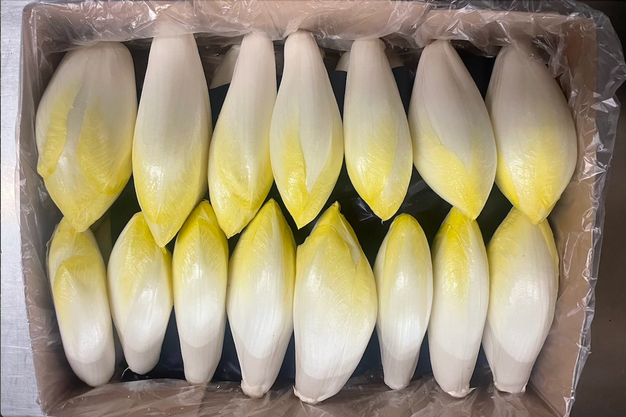
Another major challenge facing the sector is the general rise in production costs, which began with the war in Ukraine. Energy, cardboard, and plastic packaging: All essential elements for a largely pre-packaged product. "Prices have gradually settled down, but we have just come through two really difficult years. We now need to catch our breath."
 © Ferme Hemeryck-Duchateau
But the most acute challenge concerns labor. As a manual, precise, and labor-intensive crop, endives require a lot of human organization: sorting the roots, putting them into tubs, forcing, and packaging. "Endives are a very special crop that needs to be grown with a lot of care. I always heard my grandparents talk about the difficulty of recruiting, managing, and retaining staff. It is a point that has often frightened younger generations of growers." But Colette Duchateau prefers to take a constructive view. "Labor is a real issue and not the easiest to manage; that is a fact. But growing endives is also a very inclusive profession in the sense that it is easy to learn. It does not require a diploma, just good interpersonal skills. It is a real career springboard, and that is what we need to communicate. The grower insists on the need to consider labor as a priority in the same way as agronomic issues. "For the sector to survive, we have to consider the labor issue in the same way as the choice of new varieties."
For more information:
Colette Duchateau
Endigra - Ferme Hemeryck-Duchateau
[email protected]
www.ferme-hemeryck-duchateau.fr