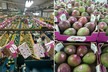
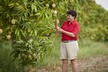
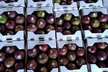
The growing demand for Red and Gold kiwifruit in China is encouraging orchardists to move beyond primary production, developing their own brands and marketing strategies. In Sichuan, near Chengdu, grower Wang Yi has expanded from his organic fertiliser business into kiwifruit production, managing a 12-hectare orchard planted in Zespri G3. The G3 block complements his Red kiwifruit plantings in a neighbouring district and also functions as a demonstration site where new production methods are trialled for other local growers.
Alongside orchard development, Wang has created his own brand, Shang Yi, which markets the G3 fruit. He notes differences in performance between varieties. "The G3 delivers a 25% lower yield than our local Gold variety (Jinyan), but it gains a higher price. The local Gold variety's flavour is not as good as the G3, and locals prefer the G3 fruit, although the G3 is harder to grow." Chinese-grown G3 is typically harvested at a higher Brix level and around 18 per cent dry matter, compared to about 15 per cent in New Zealand.
Local Gold fruit generally sells for about half the value of Zespri SunGold, while Chinese-grown G3 commonly reaches about two-thirds of SunGold returns. Wang said that while he is building his own brand identity, he would be open to working with Zespri due to the premium attached to the label. He also sees potential for Chinese-grown fruit to complement New Zealand supply in off-season windows.
During a recent visit to China by Farmers Weekly, China Daily reported on a court ruling in Wuhan involving the production and sale of unauthorised Zespri G3 fruit. The court ordered the defendant to pay about US$790,000 (NZ$1.3 million) in compensation and to remove more than 260 hectares of G3 plantings. The grower is appealing the decision. Local growers are aware of the case and its possible impact on future planting decisions. Wang said it may slow new G3 plantings in Sichuan.
The coverage of the case by China Daily reflects the government's interest in reinforcing plant variety protection laws. The Chinese government has also expanded investment in agri-park research and infrastructure in Sichuan to attract further agricultural development.
Despite the uncertainty around unauthorised G3 production, overall kiwifruit plantings in Sichuan are still expected to rise. The province has long produced Gold and Red varieties, and the sector continues to attract investment. A packhouse operator reported that a previous policy preventing land conversion from grain crops to kiwifruit in Chengdu has recently been relaxed. Kiwifruit, citrus, and blueberries are now considered the three main fruit crops likely to receive further support and expansion within the region.
Source: FarmersWeekly