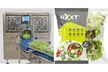
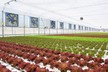
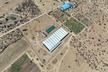
"It would be an understatement to say that we had big lessons to learn to successfully grow salad vegetables aquaponically on a commercial basis," remarks Ryno Postma, commercial director of The Oribi Aquaponics Group. Through trial and error, they've found that the fish in an aquaponics system do not take care of everything.
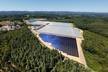
 © Oribi AquaponicsOribi Aquaponics located just outside Okahandja, north of Namibia's capital, Windhoek
After a period of inconsistent production and irregular dips - something a hobbyist can live with, but not a commercial aquaponics grower – they reviewed the entire process from top to bottom and discovered that minor water changes can have a substantial impact.
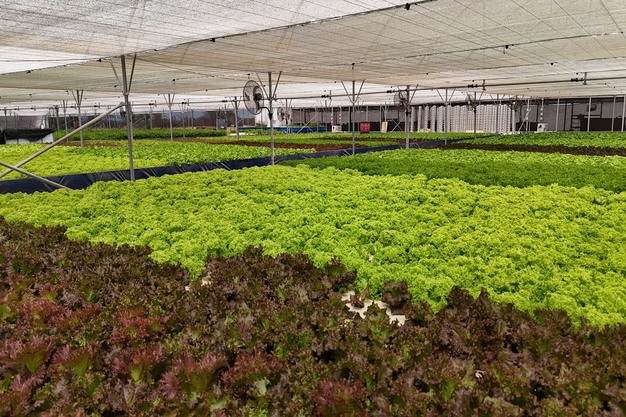
"We are now 100% in control of our production," Postma remarks; he was the original project developer and now holds the mandate to build sustainable fresh produce businesses in Southern Africa through The Oribi Aquaponics Group. The company currently utilizes 2,500 m² of aquaponic growing space housed within a 5,000 m² greenhouse structure. A recent major expansion to double their aquaponic growing capacity will fill the structure to reach the full 5,000 m² production potential.
Oribi Aquaponics grows 20 to 25 lines of vegetables, including eleven distinct lettuce types. "In addition to the aquaponic expansion, Oribi Aquaponics Namibia is diversifying its infrastructure. We are setting up a separate seedling house, a net house for soil crops, and expanding our packhouse to accommodate the increased volume," he says.
 © Oribi Aquaponics"With strengthened systems and expanding capacity, we are well-positioned to supply significantly more to the market."
Local production lowers veg prices
T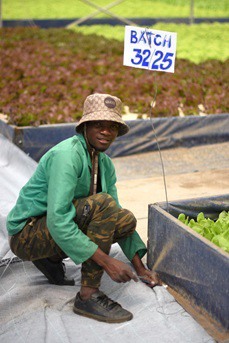 © Oribi Aquaponicshe company saw an opportunity to support the import substitution scheme promoted by the Namibian government, and they have done so with notable success, they say, with their first aquaponics farm located just outside Okahandja, 70 km from the capital Windhoek.
"We've brought down the price of fancy lettuce, specifically pillow packs, in a number of Namibian stores by between 30% and 50% because that highly perishable product didn't have to travel 1,600 km from Johannesburg, for example, to get here."
He observes that the lettuce types grown by Oribi Aquaponics are growing steadily in familiarity among Namibian consumers who, perhaps from a pricing point of view, historically preferred unwashed Iceberg heads (which are particularly difficult to grow aquaponically).
They supply the Namibian fresh produce market in Windhoek, counting clients like Food Lovers, Woermann Brock, and Spar, as well as Freshmark, the fresh division of South African retailer Checkers. "With strengthened systems and expanding capacity, we are well-positioned to supply significantly more to the market."
The celery grown at their facility has been a particular success, and since production increased, Namibia's reliance on celery imports has dropped sharply. This shift also opens up attractive opportunities in surrounding markets. "Zambia imports four times as much celery as Namibia from twice as far," Postma notes, "There's no need for that when it can be sourced directly from their neighbours."
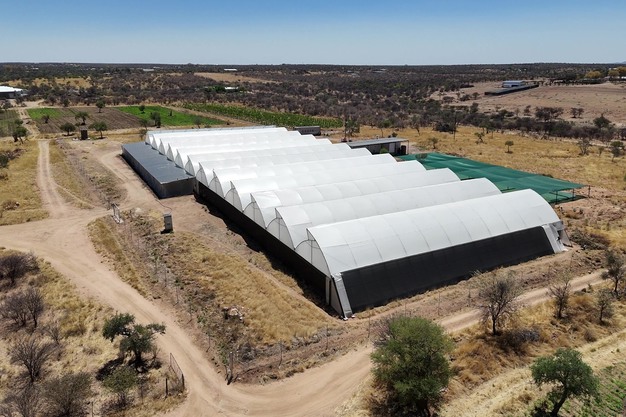 © Oribi Aquaponics Farming in the arid climate of Namibia presents certain challenges, particularly regarding water quality
Fish in aquaponics do not take care of everything
"We'd like to function as an example of how aquaponics is done commercially and profitably," Postma says. "Many people are doing it, but very few on scale and commercially." They'd like to share some of the lessons they've learned, chief among them the fallacy of expecting the fish to take care of everything. This, he says, will surely lead to failure in one of the many variables where something can go wrong.
To manage these complexities, they have built their own tracker to oversee production, ensuring consistency so that eleven lettuce crops can be harvested annually.
They are rebuilding their tilapia fish stocks with good genetics; they're not where they want to be in terms of fish numbers, and that leads to a nitrate shortage in the system, which they've had to supplement as a temporary measure, he says.
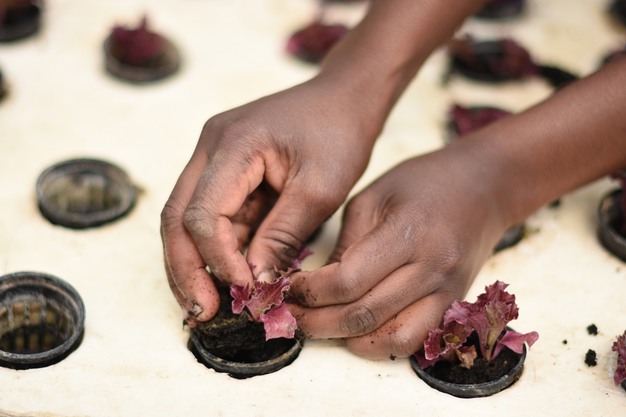
But even when the fish are functioning swimmingly, that's not the end of it. "Our biggest learning curve - and this is where many who attempt aquaponics get it wrong - is thinking the plants are in, and they can now sit back. In reality, the fish don't supply everything that plants need, so there will always be a level of supplementation."
Farming in the arid climate of Namibia presents certain challenges, particularly regarding water quality. "Hydroponics has the same issue: nutrients are salts, and the buildup needs to be managed closely and removed by flushing the system at times. We have to manage this carefully within a circular system."
 © Oribi Aquaponics
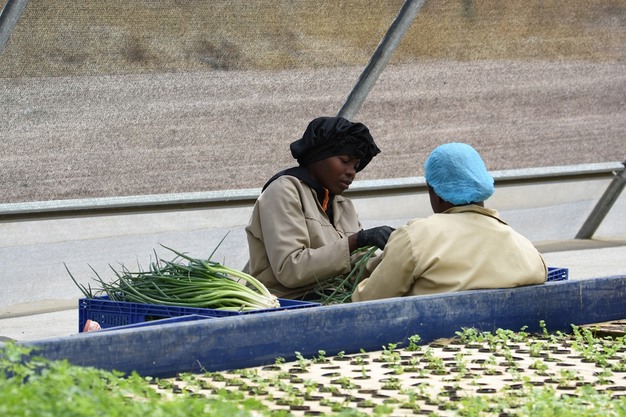
Some herbs, like basil and mint, flourish in the aquatic environment, while others such as rosemary are planted outdoors in soil augmented by the mushroom compost of their farm manager and team member Jan Conradie, a mushroom farmer.
Postma reckons Oribi Aquaponics will soon be among the largest operational aquaponics farms in Africa. "It sounds impressive to say you're one of the biggest, but what is really impressive is when you supply high-quality products, your clients are happy, you create jobs, and you're helping to grow the market."
View the full current offering of Oribi Aquaponics.
 For more information:
Oribi Aquaponics
Tel: +264 61 302 577
Email: [email protected]