The start of the Egyptian mandarin campaign is marked by anxious anticipation on the part of exporters regarding demand, according to Mahmoud Esawy from the Egyptian company Citrus Agro.
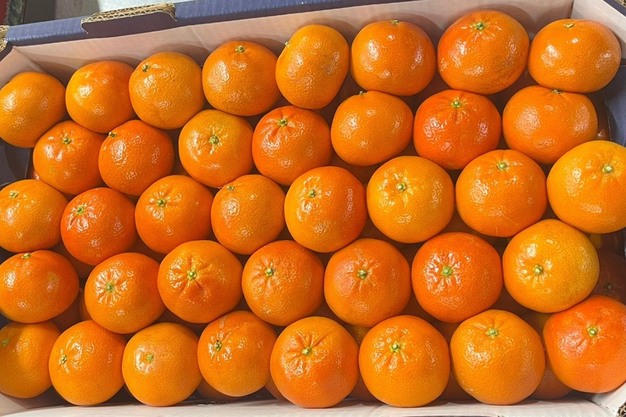
Mandarin production volumes in Egypt are cyclical, following a pattern of weak year/strong year. This season, expected volumes are significantly higher than last season, according to Esawy, with a trend toward larger sizes. The availability of consistent volumes will result in lower prices than last season, the exporter adds.
 © Mahmoud
However, Egyptian exporters are still anticipating demand from Russia. Esawy states: "We are apprehensive about a repeat of the slowdown in the Russian market this season, as it is our main market for mandarins. Last season, prices were high, which significantly slowed exports to Russia, and we are seeing that slowdown in the market continue into the start of the current season."
In the last season, 2024/2025, total Egyptian mandarin exports amounted to 245,764 tons, compared to 307,946 tons in the previous season, of which 114,700 tons were exported to Russia in 2024/2025, compared to 136,023 tons in 2023/2024.
"I want to reassure everyone that there will be no shortage of Egyptian citrus fruits this year, not in oranges and certainly not in mandarins. Prices will be lower than last season, and we hope that demand will follow, especially in Russia," Esawy adds.
According to other concordant professional statements, Egyptian exporters are seeing little interest in early Egyptian mandarins, such as the Cristina and Vermont varieties. The same sources anticipate an improvement in demand later in the season, around February, the busiest period for Egyptian mandarins.
For more information:
Mahmoud Esawy
Citrus Agro For Packing And Exporting Agriculture Crops
Tel: +201114061313
Email: [email protected]
www.citrusagro.com