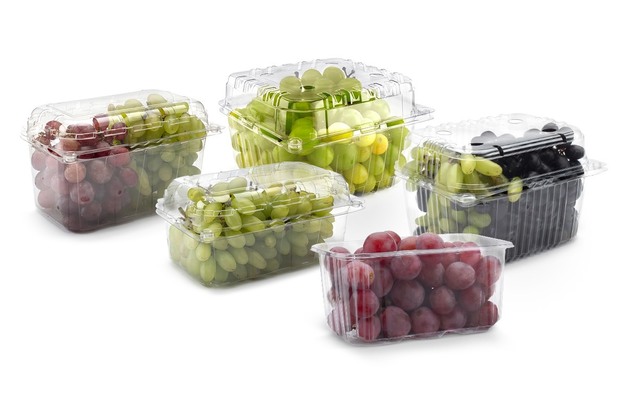
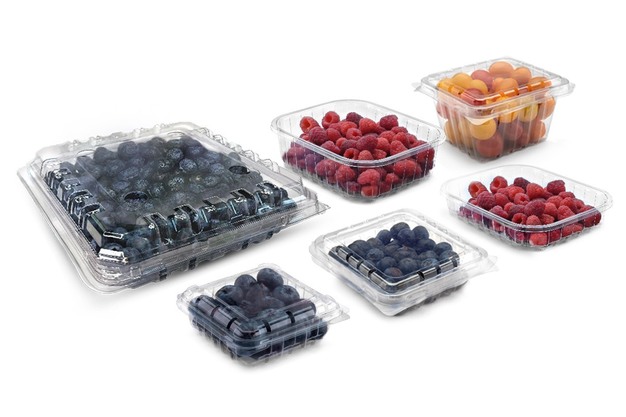
Across major fruit-growing and importing regions, packaging choices continue to vary widely, shaped by local handling practices, retail needs and consumer habits, says Sukhdeep Sethi, managing director at AVI Global Plast, a packaging manufacturer from India: "We manufacture recycled PET punnets for fruits, salads, cut fruits and other foods, with our grapes and berry packs being the most popular. Every region has its own standard formats, and our catalogue is built around those. For the U.S. and Canada, we supply grape clamshells and punnets in 1lb, 2lb8, 2lb10 and 3lb sizes. In Europe, the common picks are 250g, 500g, and 1000g. For berries, we produce 125g/4.4oz, 1 pint, and 18oz packs for markets including Morocco, the U.S., and Latin America."
 © AVI Global Plast Pvt. Ltd.
Building on these regional differences, Sethi explains that it's not just the size of the pack that varies; sometimes even the weight of the packaging itself becomes a deciding factor. "Each region follows its own norms when it comes to packaging. Europe prefers lighter packs because of sustainability goals and plastic-related levies, whereas the U.S. and Canada still lean toward heavier, sturdier packs. In Europe, we lighten the pack weight based on supermarket line requirements by downgauging. This means reducing material use, without compromising on strength and quality, while also helping our customers save on costs."
Sethi notes that these conversations around weight and material use tie into a broader trend. A few years ago, people were mostly trying to get rid of plastic packaging altogether, but Sethi emphasizes there are many features that plastic packaging offers that alternatives do not: "Removing plastic entirely isn't practical. Compared with other materials, plastic protects freshness far better, especially for fruits and vegetables that lose moisture quickly. So, the discussion isn't only about environmental impact; it's also about preventing food loss. Eliminating plastic isn't sustainable if it causes more fruit spoilage. Now, the focus has shifted from completely cutting out plastic to using packs that genuinely suit each product. Shelf-life, protection in transit, and shelf appeal all play a role, and that's where plastic still proves useful."
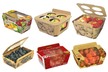
"Tender fruits like berries bruise easily and can leak. In cardboard, they tend to deteriorate quickly, often developing mold. In fact, in cardboard, an inner layer of plastic is still used to avoid direct contact. With our first Starlinger Decon unit, an EFSA-approved technology that brings recycled PET up to food-safe standards, we're able to produce 100% mono-layer recycled PET films. This allows us to offer packs made fully from recycled PET, giving brands a way to shift from virgin plastic completely without turning to cardboard."
 © AVI Global Plast Pvt. Ltd.
Another factor closely linked to fruit quality is airflow, which AVI addresses by designing the packs with enough vents to keep them fresh, Sethi explains. "We place vents strategically to keep air moving around the fruit. Like for grapes, our heat-seal punnet includes lateral vents, which continue to work even when packs are stacked. The vents are cut cleanly to avoid sharp bits that could bruise the fruit. Many growers tell us that stray plastic pieces in other market options often harm the fruits and also pose a safety concern.
Looking ahead, AVI is also listening to the feedback it gets during trade shows. "When we exhibited during IFPA last month, most of our visitors were from the U.S., Canada, Mexico, and other parts of South America, and they were happy to see the range we have, particularly for grapes, berries, and cherry tomatoes. Some visitors asked about packs of fruits specific to their region that aren't part of our current line. We assured them that we're ready to work with them on new designs, whether that means matching the packs they already use or creating something new together. Our aim is to support them in every stage of the process and build relationships that last," Sethi concludes.
For more information:
Sukhdeep Singh Sethi
AVI Global Plast
Email: [email protected]
https://avigloplast.com/