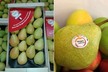
Dutch and Belgian growers have experienced an intense pear harvest season. The warm and stable weather meant pears had to be picked at high speed to avoid overripening. "That was all hands on deck for a while. You have about 10 days to harvest everything at the right time. That extra week makes or breaks your season, but fortunately, we managed to complete everything nicely," says Wim Bijl of the Piershil-based company of the same name.
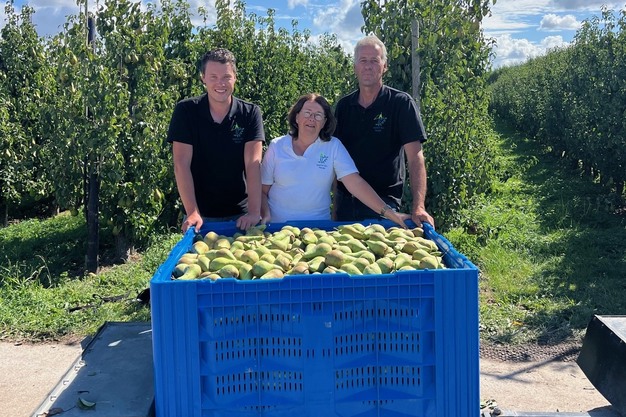 © Wim Bijl
The Bijl family
"In hindsight, we perhaps could have started about four days earlier. That would have given us much more peace of mind, but fortunately, the pears in storage look good," Wim continues. "If it had rained for two weeks, we would never have managed it. Polish workers also prefer good weather. It is much more difficult to work in the field when it rains, but in that respect, the weather was perfect. We just had to move a bit faster."
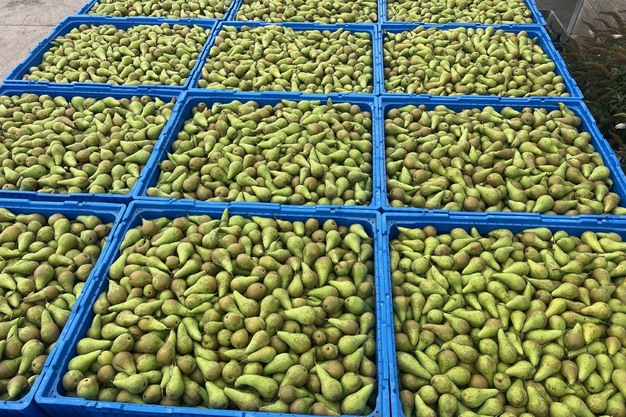
Wim is satisfied with how the pears entered storage. "Good quality and nice sizes. That is the advantage of favourable weather conditions. Conditions we have actually had for the past eight years. It is remarkable. We almost live in an Italian climate now. It just keeps getting hot and dry. That has been a problem for growers without irrigation, because in some places there was only 40 to 50 mm of rain in the summer. That is disastrous for growth, but fortunately, we had enough water. Now it remains to be seen how prices will develop during the season."
 © Wim Bijl
Netherlands and Belgium dominant
"It has been a bit quiet for a while, but compared to other products, we are still in a reasonable position," Wim says. "Potatoes, for example, are not worth much. With pears, you can still see a fair amount of trade. A lot of sorting is happening, and the poorer pears have now been graded out. There is good loading, and if that pace continues, I am confident things will be fine."
He notes that Dutch and Belgian pears currently dominate the market. "In terms of sales, more and more countries are buying Conference pears. As producing countries, we have more or less conquered the whole of Europe. Conference does well in Belgium and the Netherlands, but it remains difficult in other countries. In Spain and Italy, for example, it is almost impossible due to changing climate conditions. Here too. When I was young, winter meant two weeks of ice. My grandchildren have only experienced that once. That says everything: it is simply getting warmer. In Italy, they now talk about North African conditions, and that shift is gradually moving in our direction."
Toolbox gets smaller
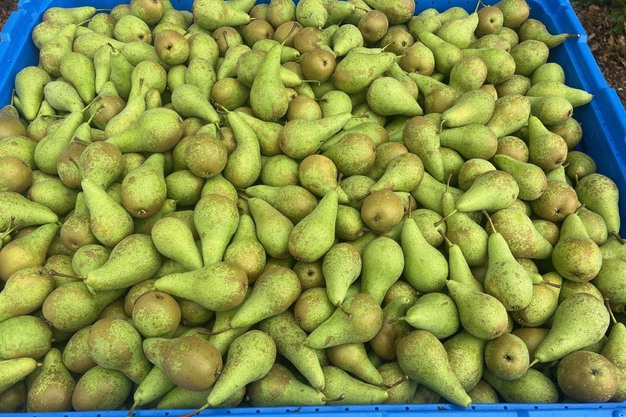
This creates opportunities, but challenges remain. "Labour continues to be a major concern, and next year transport costs will increase again by 21 cents per kilometre. Everything is becoming more expensive. Food remains cheap for consumers relative to income, but production costs are rising sharply."
 © Wim Bijl
"What worries me most is crop protection," Wim adds. "More and more products are disappearing, and without them, we cannot deliver good fruit. We work neatly and responsibly, but something must remain in the toolbox to manage pests. Aphids, for example, are almost impossible to control. Not only in pears but also in crops like lettuce. The same goes for the pear leaf flea. The last effective products have disappeared. Then it becomes difficult, because once a problem arises, there is often no solution."
"We try to prevent problems. The products that remain can work if you spray under perfect conditions, but those conditions are rare. Working outside is simply different from working in a greenhouse. You cannot set the temperature to 20 degrees and spray at the ideal moment. So-called green products still do not work sufficiently in practice. They are expensive and often not effective enough. Some years they work, but often the timing or temperature is not right. Then you spray, but the result is poor. We do work with natural enemies like predatory mites and earwigs, and that goes well. But truly effective green agents? We are not seeing that yet."
"Without the right products, we cannot supply all year round"
Wim wants to raise awareness about year-round supply expectations. "We store Conference pears year-round and supply supermarkets year-round. But that is only possible with proper protection against rot. Two years ago, we stored pears for 360 days, and they came out perfectly. If those products disappear, that becomes impossible. Then I wouldn't dare store pears for more than six months. Rot is devastating, and nobody benefits. We tried residue-free cultivation in the past. It worked for a while. The pears were fine until December or January, but then rot started. Without crop protection, it doesn't work."

"The profession requires increasing knowledge and attention. Take canker, for example. We have started pruning again. When leaves fall, wounds form on the tree that need to be protected from infection. Canker is literally a wound that spreads spores through wind and rain. On a tree with hundreds of leaves, you have hundreds of potential infection sites. Especially in young trees, this can be disastrous. If a branch gets canker, you must prune it away and lose three years of production at that spot."
"That has major financial consequences. Fewer pears means fewer kilos and lower income. It is a profession that requires precision. Mistakes cannot be easily corrected. A wrong decision in the orchard can affect years of production. A tree does not simply recover if you do something wrong. There is so much to consider, and it is good to draw attention to that sometimes. But despite all the challenges, it remains a wonderful profession."
For more information:
Wim Bijl
Bijl's Fruit B.V.
Oosthoek 10
3265 LE Piershil
Tel: +32 (0) 6 55 904 639
[email protected]